15 min read
 20.07.2026
Top Easy Grants to Qualify For in 2026: Simple Funding Options Anyone Can Access
Definition of Simple or ‘Easy-to-Qualify-For’ Grants in 2026
In 2026, ‘easy-to-qualify-for’ grants are funding opportunities designed to lower the traditional barriers to entry, featuring minimal eligibility requirements, uncomplicated applications, and quicker review timelines. These grants are intentionally crafted to help individuals, small businesses, students, and grassroots groups who may not have advanced grant-writing skills or established organizations. For newcomers, understanding the basics can be found in our beginner’s guide to easy grants.
Such grants generally ask for only basic documentation—like personal ID, simple proof of need, or a concise description of your idea—instead of complex proposals or proof of a lengthy achievement record. The aim is to make the funding accessible even for first-time applicants or those in urgent situations. By understanding how these simplified grants work, applicants can better focus on opportunities with the highest approval rates and fastest funding turnaround. You can also read about different types of grants for further clarity.
Key Characteristics of Simplified Grants in 2026
Simplified grants in 2026 typically feature fast online applications, sometimes completed in under 30 minutes, with transparent eligibility guidelines. These could include requirements such as residency, active student enrollment, or ownership of a small business. Fast decision timelines—often a few weeks or less—are standard. Some microgrant and community programs even offer rolling applications and immediate funding for applicants meeting straightforward criteria. Explore more on documentation in our 2026 grant application documents guide.
Minimal eligibility often means less paperwork and little need for matching funds or nonprofit status. This approach widens access, especially for solo entrepreneurs, students, or smaller grassroots groups and nonprofits. For a detailed overview of eligibility, you can refer to the Grant Eligibility section at Grants.gov: https://www.grants.gov/learn-grants/grant-eligibility.
Grants with Minimal Eligibility Requirements in 2026
In 2026, several grants intentionally minimize eligibility requirements to widen access—eschewing barriers like credit checks, prior registration as a nonprofit, or lengthy organizational history. These grants are typically distributed by local governments, educational agencies, private foundations, and community organizations aiming to support applicants based on need, local impact, or basic project alignment. If you’re searching for overlooked options, review this essential list of little-known grants available now.
For example, city microgrants, emergency relief funds, Federal Pell Grants for low-income students, and community foundation quick-response funds focus on practical accessibility and speedy distribution. Real examples include rapid-response microgrants for small businesses hit by local disruptions, and targeted economic recovery funds available in various cities. For more, see the comprehensive list of little-known grants currently available: https://grants.com/essential-list-2026-little-known-grants-you-can-qualify-for-now-ultimate-guide/
Eligibility Examples: Who Qualifies Easily in 2026?
In 2026, grants with the easiest qualification criteria usually target residents of a particular city or region, enrolled students, individuals demonstrating low income, or small businesses with basic registration. Most microgrants ask for just a one-page purpose statement or project description. Internationally, social programs like SASSA’s SRD R370 grants in South Africa and Annapurna Yojana2026 in India highlight the global shift toward accessible funding, demonstrating how simplified eligibility is making a real difference. For more advice and eligibility tips, check out our 2026 grant eligibility guide.
Microgrants and Small Business Grants in 2026
Microgrants in 2026 offer small sums of funding with highly accessible applications, often limited to a single page. These grants prioritize community presence or demonstration of need, and are regularly issued by city agencies, local chambers of commerce, and large corporations seeking to boost social impact. Demand for such microgrants is increasing, as entrepreneurs and startups seek flexible, initial funding without complex requirements. For a practical guide, see how to apply for small business grants in 2026.
Small business grants in 2026, including programs from platforms like Homebase and EasyFiling, focus on local business recovery, innovation, and economic development. These grants often support urgent expenses, investments in growth, or help address the aftermath of disruptions like natural disasters. For more details, visit https://www.joinhomebase.com/blog/small-business-grants and https://easyfiling.com/blog/small-business-grants-2026.
Standout Examples: Easiest Small Business Grants of 2026
The most accessible small business grants in 2026 include the KKR Small Business Builders Grant, Galaxy of Stars Microgrants, and numerous city-level Rapid Recovery Funds. These programs generally require simple business registration proof and a short plan for how the funding will be used. Reporting is minimal and the decision processes are fast. For a comprehensive guide to the top small business grants, see the best small business grants for 2026.
Educational and Student Grants with Simplified Applications in 2026
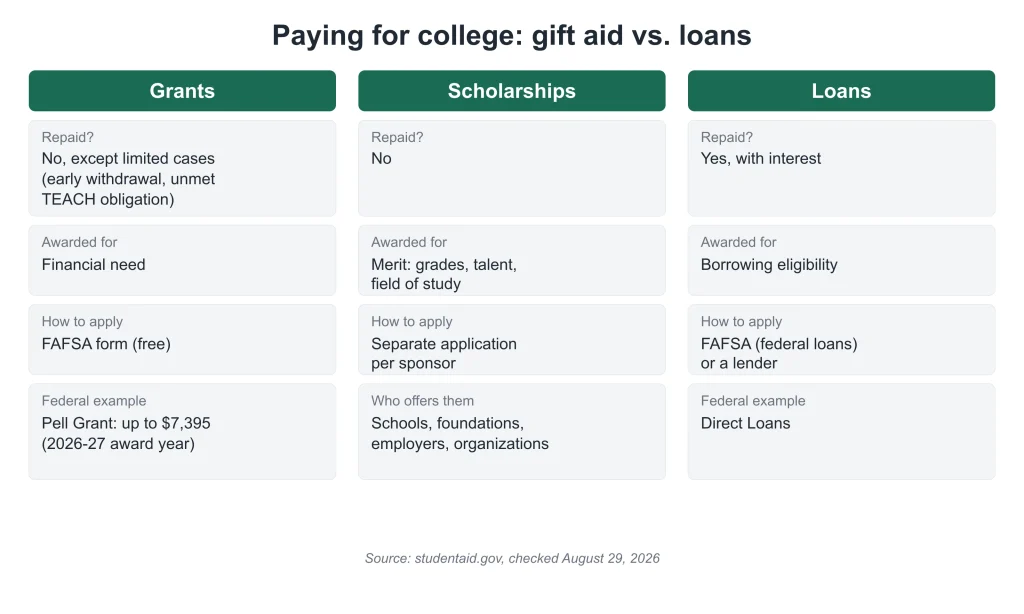
For students, several grants in 2026 retain simplified application processes and easy eligibility. The Federal Pell Grant remains one of the most accessible options for U.S. students, requiring only demonstrated financial need through the streamlined FAFSA process. Many universities and foundations have also introduced automatic consideration systems, so students are reviewed for scholarships and grants with minimal additional paperwork as they apply or enroll.
Beyond the U.S., programs like the European Union Mobility Grant and a number of automatic-entry campus scholarships provide fast funding options for both local and international students. Platforms such as TopUniversities and the European Education Area regularly update lists of these opportunities for 2026: https://www.topuniversities.com/student-finance/student-grants-study-abroad-scholarships and https://education.ec.europa.eu/education-levels/higher-education/financial-support.
Top Easiest Student and Scholarship Grants in 2026
The Federal Pell Grant, European Union Mobility Grant, and major automatic-entry scholarships (for example, those at Oxford: https://www.ox.ac.uk/admissions/graduate/fees-and-funding/funding/scholarships) remain leading examples of simplified funding for students in 2026. Usually, a single application and the submission of basic academic documents can qualify students for multiple options. These accessible processes help more students achieve higher education goals with less administrative delay. To better prepare your documents, see our guide for educational grant applications.
Community-Based and Local Government Grants in 2026
Community-based grant programs funded by city councils, local agencies, or neighborhood associations in 2026 are designed to be as accessible as possible—especially for first-time applicants and small, emerging organizations. These grants support grassroots projects, local events, and essential community services, making funds available almost immediately for qualifying applicants. You can find practical advice and a step-by-step approach in the 2026 guide to easy community development grants.
Typically, applicants must show residency, group membership, or clear community benefit in their proposal. Most city mini-grants, neighborhood microfunds, and revitalization awards require only fast online forms or short narratives. Real-world examples include the Portland Neighborhood Grant, which demonstrates how fast-track approval and community-led decision-making can drive local impact. For step-by-step help, see resources like ‘easiest-community-development-grants-simple-funding-options-for-local-impact-2026-guide.’
Case Study: Local Grants with 2026 Fast-Track Approval
The 2026 Portland Neighborhood Grant lets local groups apply in under 20 minutes; decisions are typically made by a resident-led board based on the community benefits presented. Similarly, city COVID-19 relief microgrants—when available—set the standard for quick, equitable funding. These programs show that a transparent, speedy award process can maximize participation and impact at the local level. Applicants can learn more about structuring their proposals for success in this beginner’s guide to community grants.
COVID-19 Relief or Disaster Recovery Grants in 2026
While large-scale pandemic emergency funding has decreased since 2023, several focused COVID-19 relief and disaster recovery grants still exist in 2026. These programs deliver rapid support for health, housing, or economic needs—especially for those directly impacted by crises. The application processes are intentionally simple and decisions are made quickly to get help where it’s needed most. For a breakdown of the fastest programs, review the fastest community grant funding guide.
Eligibility is typically based on proof of disruption, such as sudden job loss, medical expenses, or being located in an affected area. Some disaster microgrants are renewed annually and distributed both locally and globally by health funds, international agencies, or charitable foundations. Fast funding timelines remain a core feature, ensuring applicants aren’t delayed during emergencies.
How Disaster and Emergency Grants Stay Simple in 2026
Disaster and emergency grants in 2026 are delivered via streamlined, mobile-friendly applications and can be approved in days. Prominent examples include the local Emergency Relief Funds, South Africa’s SRD R370 grant (administered by SASSA), and instant-response programs run by organizations such as United Way and city health departments. These processes are built for speed and clarity, so those in crisis can access funds without red tape. More about maximizing emergency funding is available in our emergency grants guide for 2026.
Frequently Asked Questions (2026)
Which grants are the easiest to qualify for in 2026?
In 2026, grants with relaxed eligibility—like microgrants, community development grants, Federal Pell Grants, and some local COVID-19 or disaster relief funds—are among the easiest to qualify for. They prioritize simple application forms, proof of need, and open eligibility for first-time applicants. Always check for residency, age, or organization type as possible minimum qualifiers.
What types of grants have the least eligibility requirements in 2026?
Microgrants, local community grants, starter business grants, and certain student aid programs have minimal eligibility requirements in 2026. These focus on need, project alignment, or local residency rather than business longevity, prior grant history, or matching funds.
Are there any grants with simple application processes in 2026?
Many 2026 grant programs offer fast-track, digital-first application processes. Microgrants, city-level grants, and many student grant programs ask for basic personal details, a one-page project outline, or a brief funding justification—often processed online with results in under a month.
How can first-time applicants find easy grants in 2026?
First-time 2026 applicants should start by searching local government websites, university financial aid pages, and directories like Grants.gov. Using filters like ‘microgrant’, ‘starter’, or ‘relief’ increases the chance of finding simplified options. Review community notice boards and local nonprofit bulletins for announcements of pop-up grant cycles with few requirements.
Are local government grants easier to obtain than federal grants in 2026?
Generally, yes. In 2026, local government grants are more accessible for beginners as they require less documentation and are often targeted at specific local needs or projects. Federal grants can have more competitive pools and formal eligibility requirements, though flagship programs like the Federal Pell Grant remain straightforward for students.
Conclusion (2026)
Knowing which types of grants are the easiest to qualify for in 2026 is essential, especially for applicants with limited resources, time, or prior experience. Simplified grants like microgrants, small business funding, and fast-turnaround community awards are designed to remove historic barriers. These options feature short application forms, transparent eligibility, and rapid decision-making, making them excellent choices for individuals, first-timers, and smaller organizations.
Major programs such as the Federal Pell Grant and local microgrant schemes are leaders in accessibility, typically requiring minimal documentation and a brief funding narrative. Many local governments and education providers now use digital systems to streamline applications, expanding the path for underserved groups to access funding without hassle.
Though large-scale pandemic grants have decreased, COVID-19 and disaster relief funds still play a significant role in supporting those in crisis. These programs emphasize swift distribution with simple, applicant-friendly processes tailored to urgent needs.
When searching for funding in 2026, applicants should concentrate on programs recognized for minimal eligibility rules, clear application steps, and strong histories of supporting new applicants. Utilizing community offices and educational aid portals improves the chance of success. Stay current with listings on Grants.gov and monitor local government websites for new and recurring simplified grant offerings.
Ready to secure funding in 2026? Start your search with local microgrants, student aid, and community opportunities—visit Grants.gov and your city’s grant portal to apply today!
About Grants (2026)
Visit https://grants.com/Grants_Form to start.