


 6 min read
 27.11.2026
Small Business Grants: What Owners Should Know
Small business grants exist, but they are limited and competitive, and most owners are better served by financing. The SBA does not provide grants to start or expand a business, though small businesses conducting scientific research and development may qualify for SBIR or STTR grants. Federal grants generally go to states and organizations. Learn more about SBA grants.
Grants.com is not a government agency or a lender and does not guarantee eligibility, approval, or funding. See the full disclaimer at the end of this article.
Types of small business grants
SBIR and STTR grants are for small businesses doing scientific research and development. State and local programs are run by state and local governments for businesses in their area. Grants for women, minority and veteran owners are aimed at those owners; see our guide to grants for women. Private and corporate grants come from companies and foundations rather than the government.
If none of these fits your project, financing is usually the better path. See how grants and loans compare.
What government grants for small business are available?
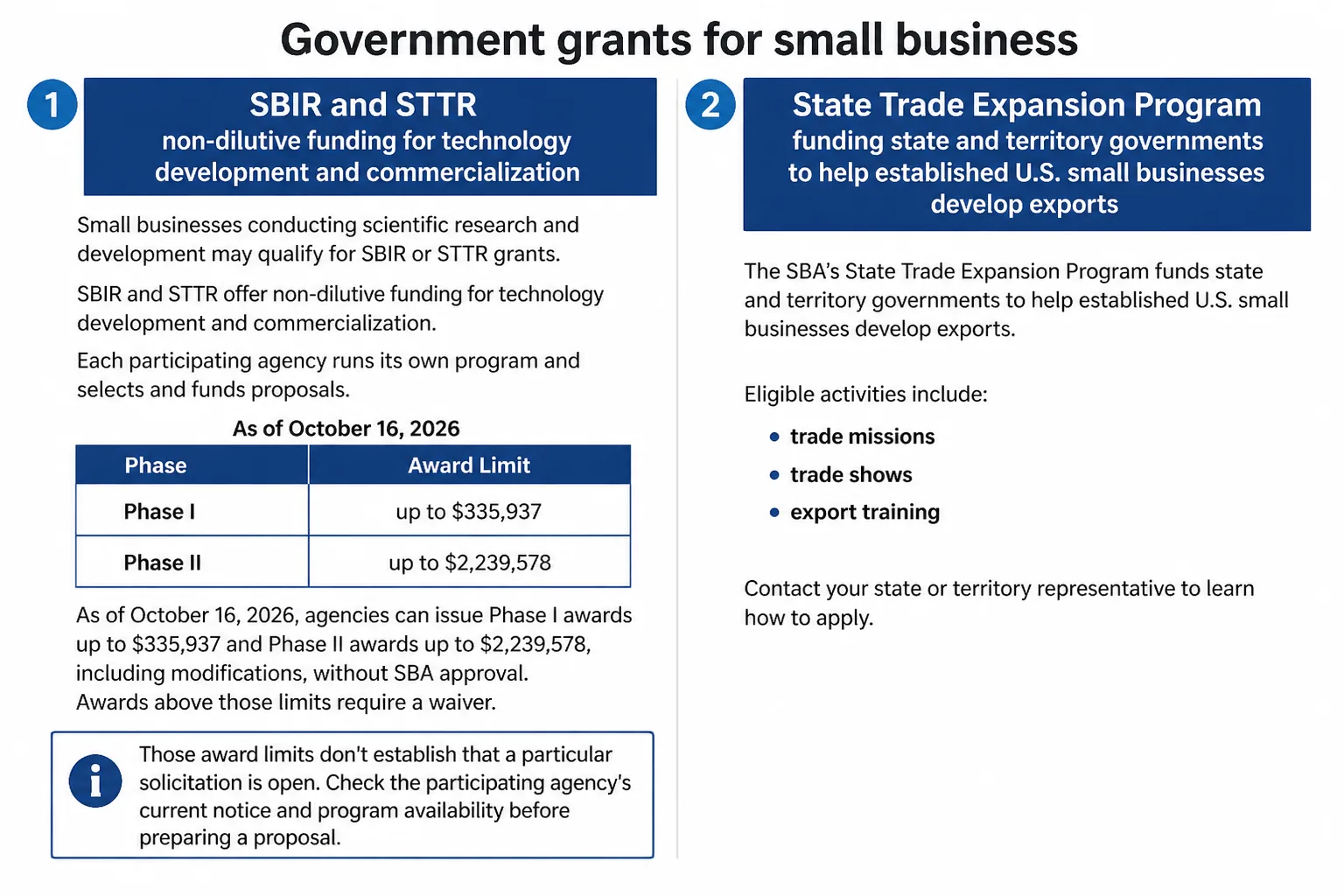
For government grant options, consider SBIR and STTR for research and development or STEP for export development.
SBIR and STTR offer non-dilutive funding for technology development and commercialization, and each participating agency runs its own program and selects and funds proposals.
As of October 16, 2026, agencies can issue Phase I and II awards of up to $335,937 and $2,239,578, respectively, including modifications, without SBA approval; awards above those limits require a waiver.
The SBA’s State Trade Expansion Program funds state and territory governments to help established U.S. small businesses develop exports through eligible activities such as trade missions, trade shows and export training. Contact your state or territory representative to learn how to apply.
Research and development funding
An award limit is not a funding guarantee, so plan your proposal around your project and budget.
Can a business apply directly for rural or community funding?
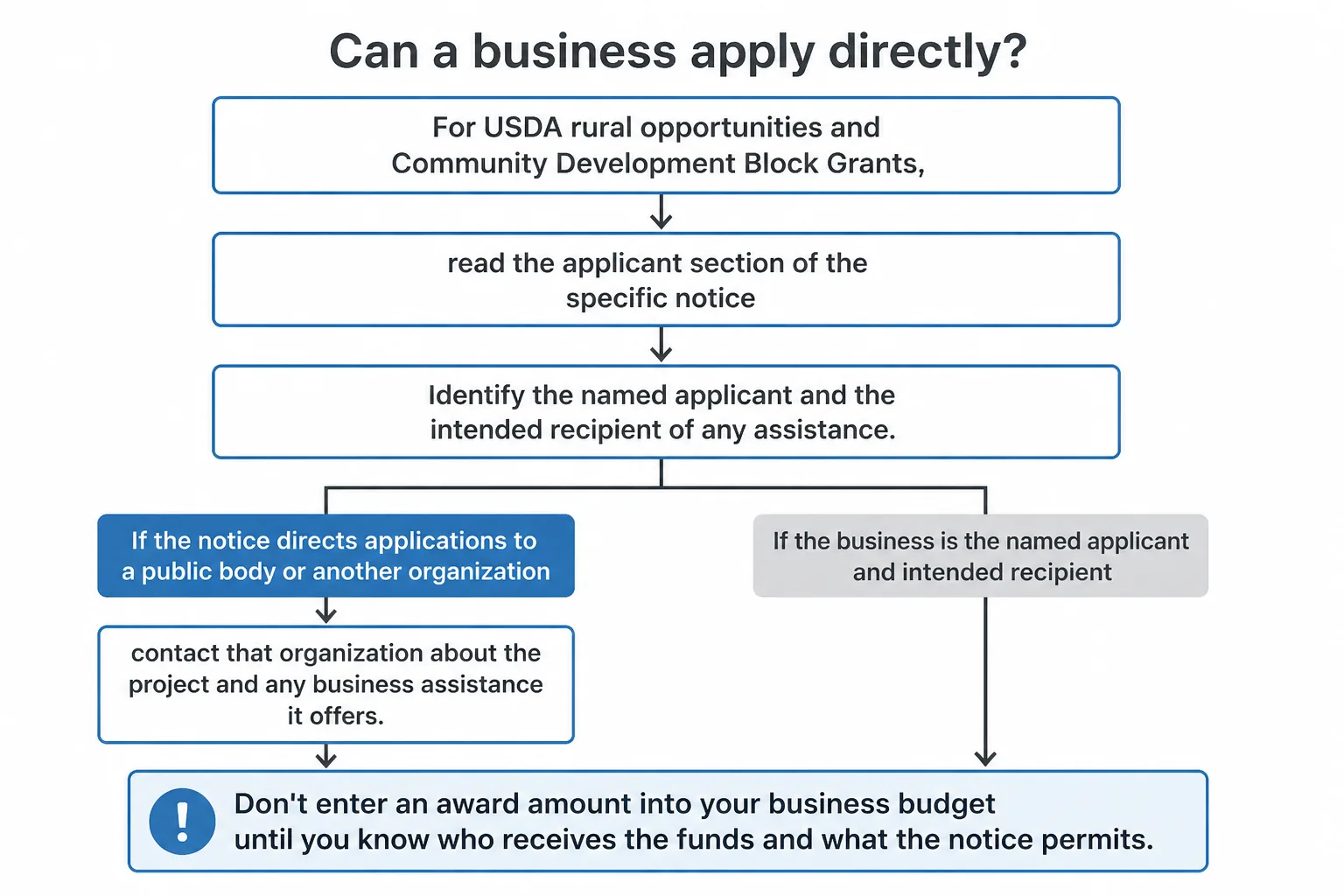
Generally, no: federal grants are typically limited to states and organizations. For rural or community funding, seek assistance through the relevant public body or organization.
Contact that organization about the project and any business assistance it offers. Avoid budgeting an award for your business unless it is directed to your business.
How do you find small business grants you may be eligible for?
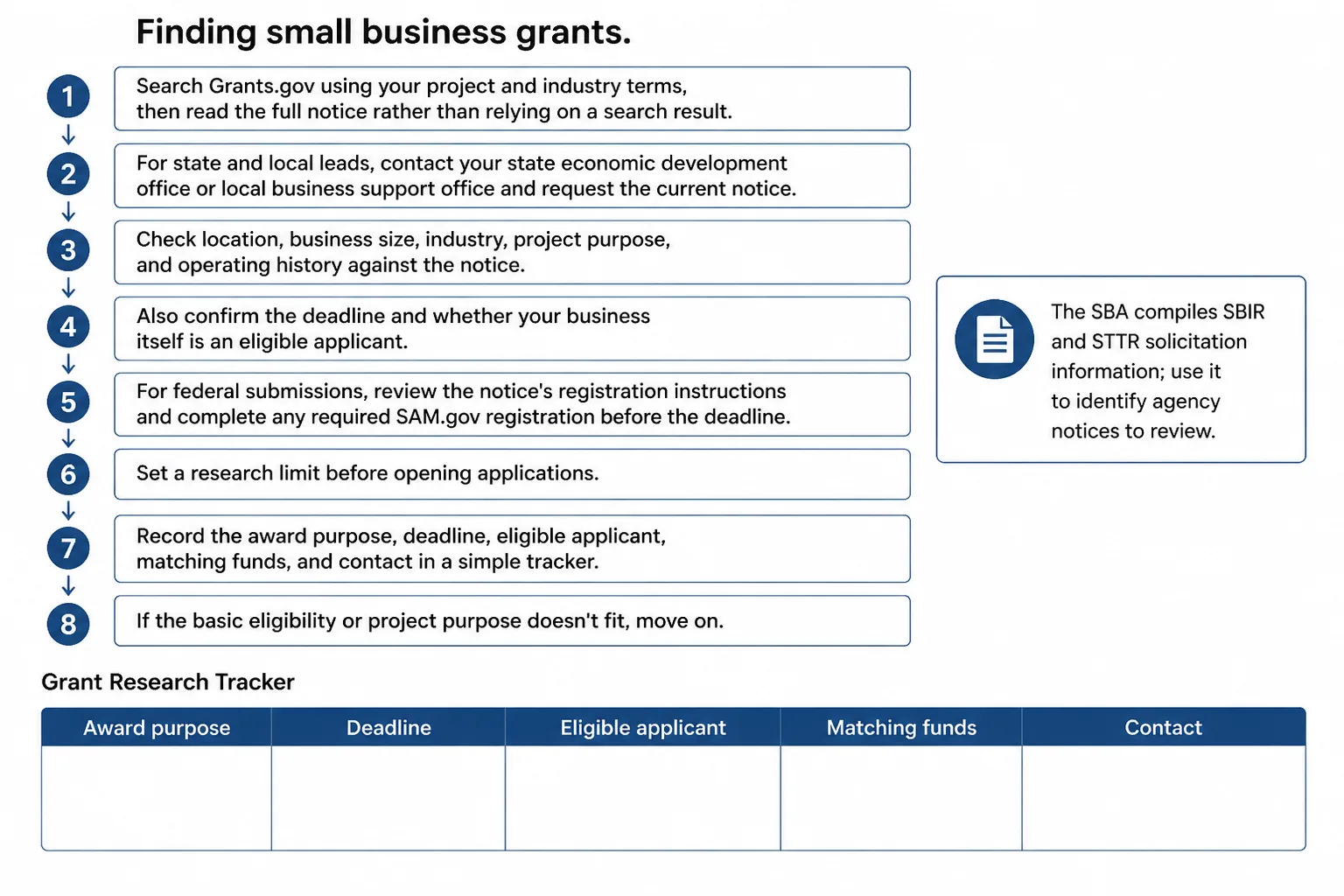
Search Grants.gov using your project and industry terms. For state and local leads, contact your state economic development office or local business support office.
Focus on opportunities that fit your location, business size, industry, project purpose, and operating history. Use the opportunity’s notice to find the deadline and required documents.
Set a research limit before opening applications. Record the award purpose, deadline, eligible applicant, matching funds, and contact in a simple tracker. If the basic eligibility or project purpose doesn’t fit, move on.
To find SBIR and STTR opportunities, look at participating agencies’ solicitation information.
What should you prepare before applying?
Keep a working copy of your business plan, project description, budget, and financial statements ready for review.
Account for any matching-fund requirements and payment procedures, including whether reimbursement applies. Identify any required expense records or progress reports before preparing your application.
Compare the time needed to prepare the submission with the potential award and the cash needed to carry out the project. A grant that fits on paper may still be a poor fit for your schedule or cash flow.
How can you recognize a grant scam?
Treat a request for payment in exchange for an award decision as a warning. Verify the opportunity through the issuing agency’s official website and use contact details published there, rather than details supplied in an unexpected message. Don’t send banking credentials or sensitive business records until you’ve verified the recipient and the submission method.
What if a grant isn’t the right fit?
You can contact a Small Business Development Center or SCORE and ask what help is available for your situation.
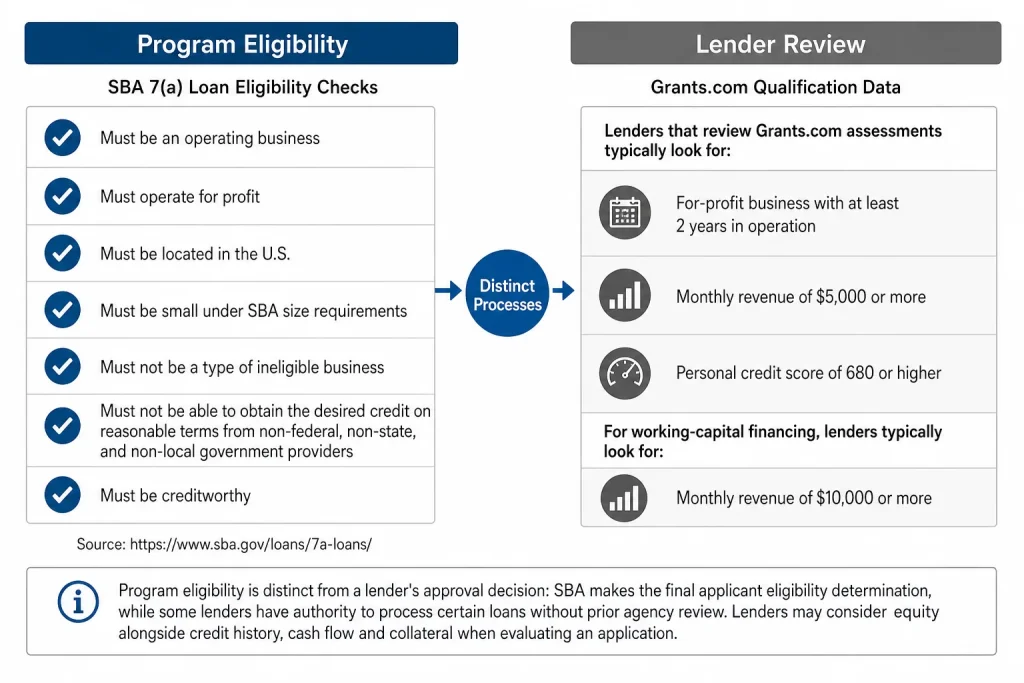
For SBA-backed loans, lenders that review Grants.com assessments typically look for a for-profit business with at least 2 years in operation, monthly revenue of $5,000 or more and a personal credit score of 680 or higher. For working-capital financing, lenders that review Grants.com assessments typically look for monthly revenue of $10,000 or more.
Take the free Funding Eligibility Assessment to check which funding options fit your business.
Check your real funding options
Answer a few questions about your business and see which funding option actually fits: SBA loans, working capital, the few grants that are real, or federal grant research. It is free and takes a few minutes.
Start the free Funding Eligibility Assessment →
FAQ
Do small business grants have to be repaid?
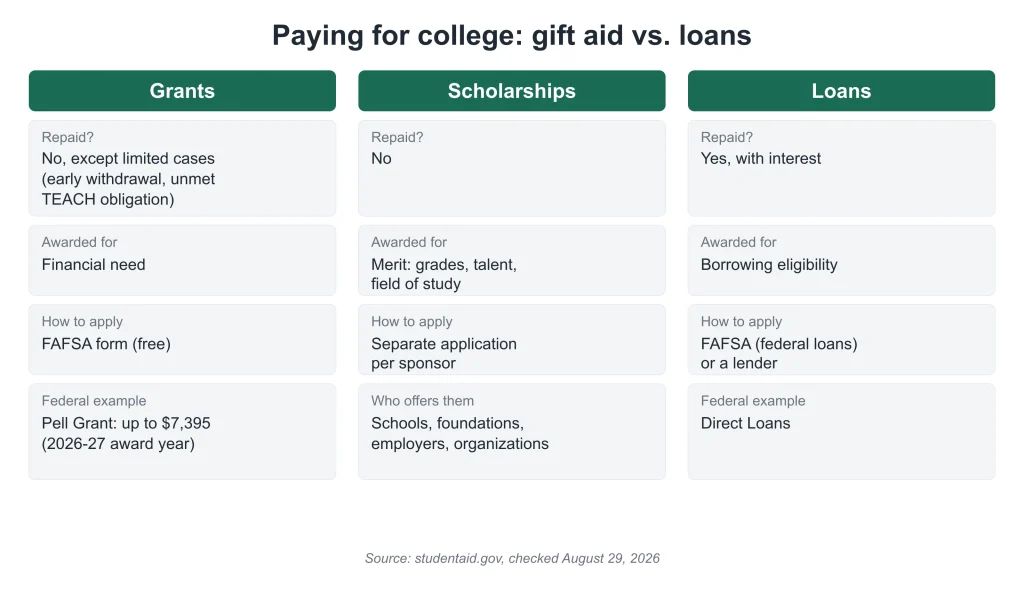
Generally, no. That is the big difference from a loan. Some grants can require repayment if you don’t meet their terms.
Can I use a small business grant for any expense?
Generally, no. Focus your proposed spending on the purpose of the grant.
What’s the difference between a grant and a loan?
A grant generally doesn’t have to be repaid, while a loan is repaid with interest. If you break a grant’s conditions, you may have to pay it back.
Should I apply if a grant deadline has passed?
Generally, no. Look for another opportunity instead.
Grants.com is a private funding-discovery and assistance platform. It is not a government agency and does not issue or approve grants unless explicitly stated for a specific program. Grants.com does not guarantee eligibility, approval, funding, award amounts, application outcomes, loan approval, or tax-credit acceptance. Final decisions are made by independent funders, agencies, lenders, or tax authorities. Information provided through Grants.com is for general informational and educational purposes and may not reflect the most recent program rules. Users should verify eligibility, deadlines, requirements, and application procedures with the official funding organization.
Recent Posts




Share This Post


