7 min read
 24.09.2026
What Is a Pell Grant and How Does It Work?
By Grants.com Editorial Team. Reviewed by Elise Perez, Grant Writer and Editorial Reviewer
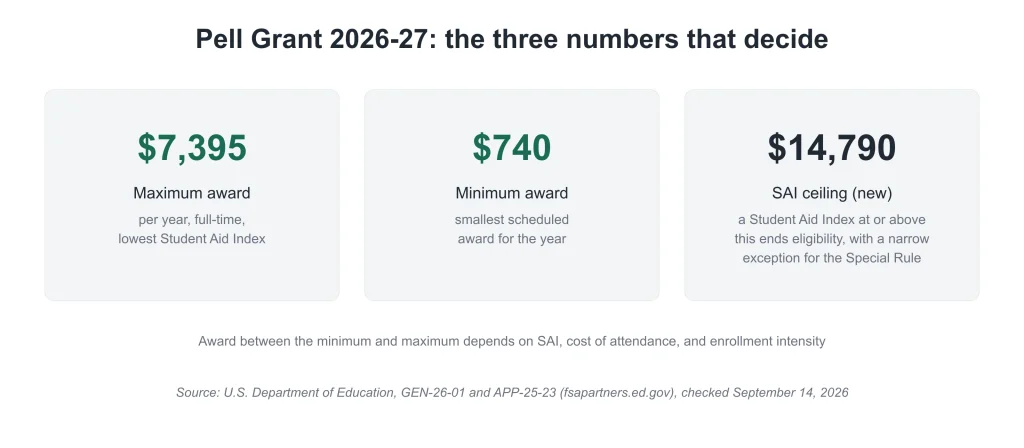
A Pell Grant is federal money for undergraduate students with financial need, and in most cases you don’t pay it back. It’s the largest federal grant program, run by the U.S. Department of Education, and for the 2026-27 award year it pays between $740 and $7,395, per the Department’s award amounts letter (checked September 14, 2026). One free form starts it: the FAFSA.
Before anything else, the protection rule. The FAFSA is free, the grant isn’t competitive, and no legitimate service charges to get you a Pell Grant. Offers like that are the pattern our scam safety center exists for.
A Pell Grant is need-based gift aid from the federal government for undergraduates who haven’t earned a bachelor’s degree. Unlike a loan, it isn’t repaid except in limited cases, and unlike most scholarships, it’s awarded on financial need rather than merit, per studentaid.gov (checked September 14, 2026).
Here for business funding instead? The free Funding Eligibility Assessment shows which funding lane your numbers fit.
Grants.com is a private funding-discovery and assistance platform. It is not a government agency and does not issue or approve grants unless explicitly stated for a specific programme. Grants.com does not guarantee eligibility, approval, funding, award amounts, application outcomes, loan approval, or tax-credit acceptance. Final decisions are made by independent funders, agencies, lenders, or tax authorities. Information provided through Grants.com is for general informational and educational purposes and may not reflect the most recent programme rules. Users should verify eligibility, deadlines, requirements, and application procedures with the official funding organisation.
How is a Pell Grant different from a loan or a scholarship?
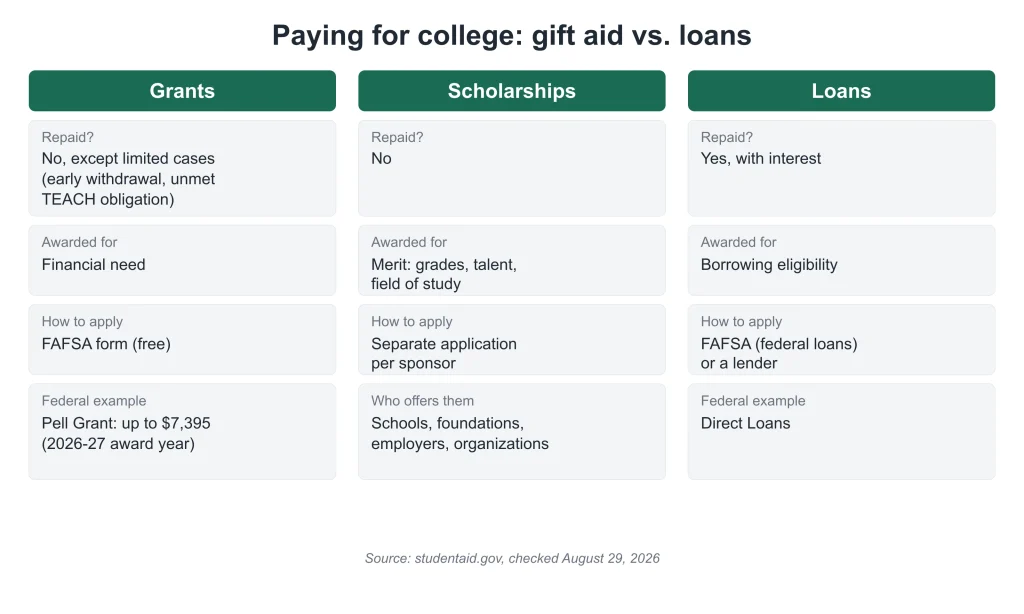
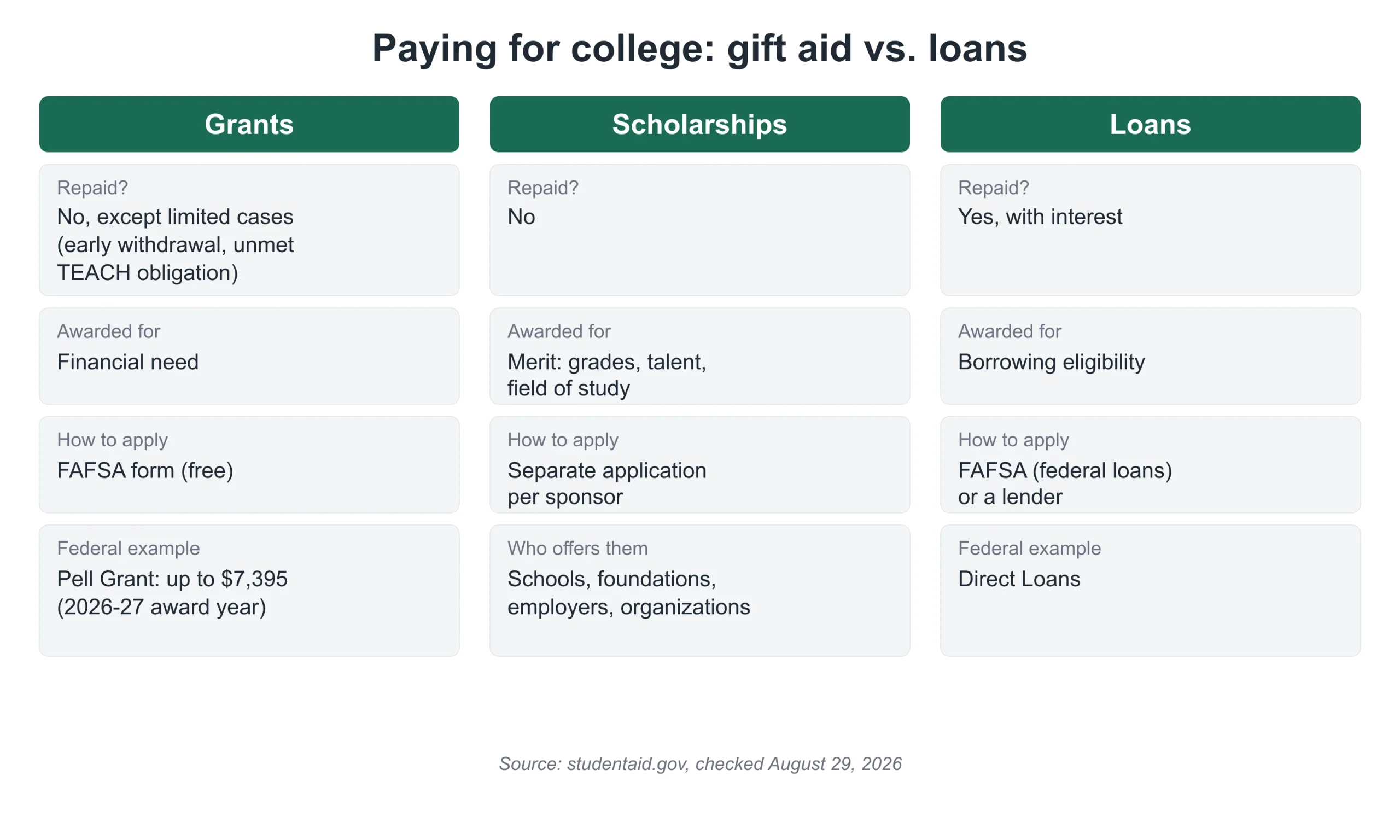
A loan is borrowed money that comes back with interest. A Pell Grant doesn’t, except in specific situations like withdrawing early or an enrollment change that lowers what you qualified for after funds were paid.
Scholarships sit closer, since both are gift aid. The difference is the basis. Most scholarships reward merit: grades, talent, essays. Pell follows need, calculated from your FAFSA. That’s also why there’s no Pell application essay and no selection committee. The formula and your school decide, and every eligible student who files receives their amount.
How does the money actually reach you?
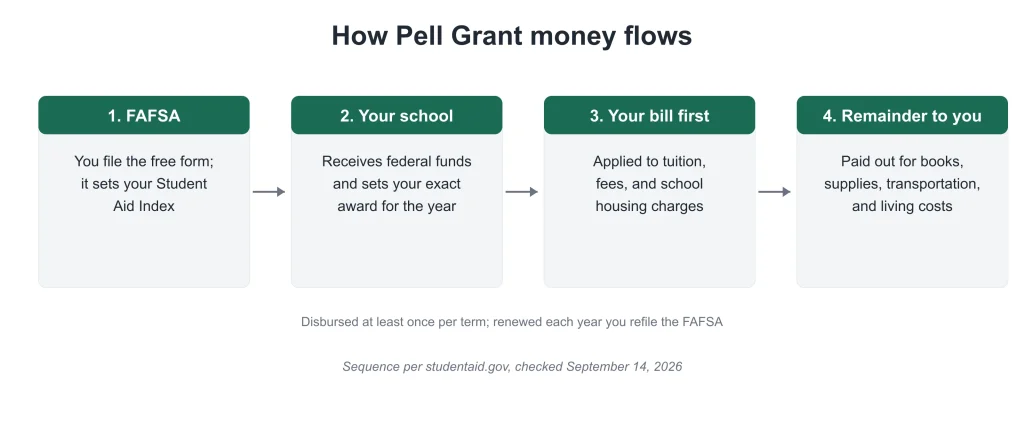
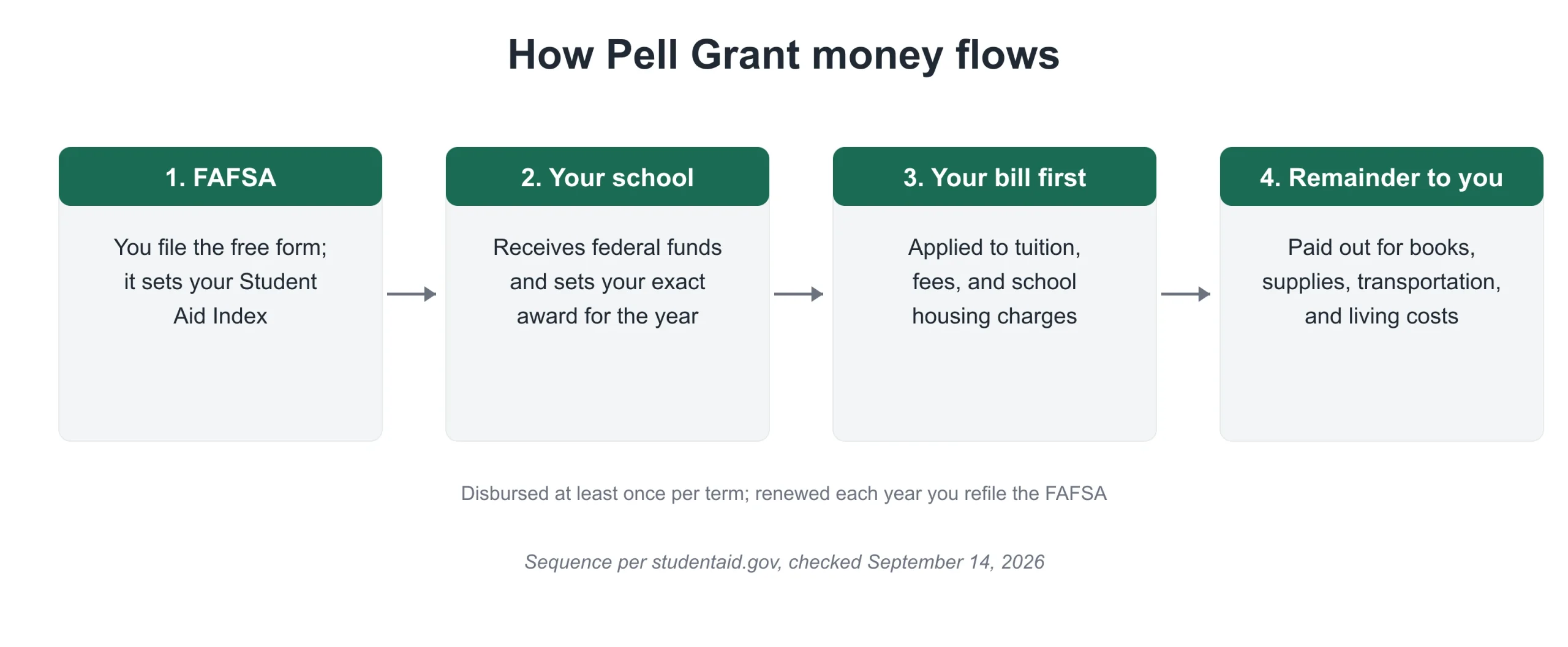
You never receive a check from Washington. The Department of Education funds your school, and the school disburses your award at least once per term, applying it first to tuition, fees, and school housing charges. Whatever remains after those charges is paid out to you for other education costs: books, supplies, transportation, off-campus rent.
Timing follows your school’s calendar, typically around the start of each payment period. If your aid shows as pending while a tuition deadline approaches, ask the financial aid office whether it can hold your account so you aren’t dropped from classes while processing finishes.
How much is a Pell Grant?
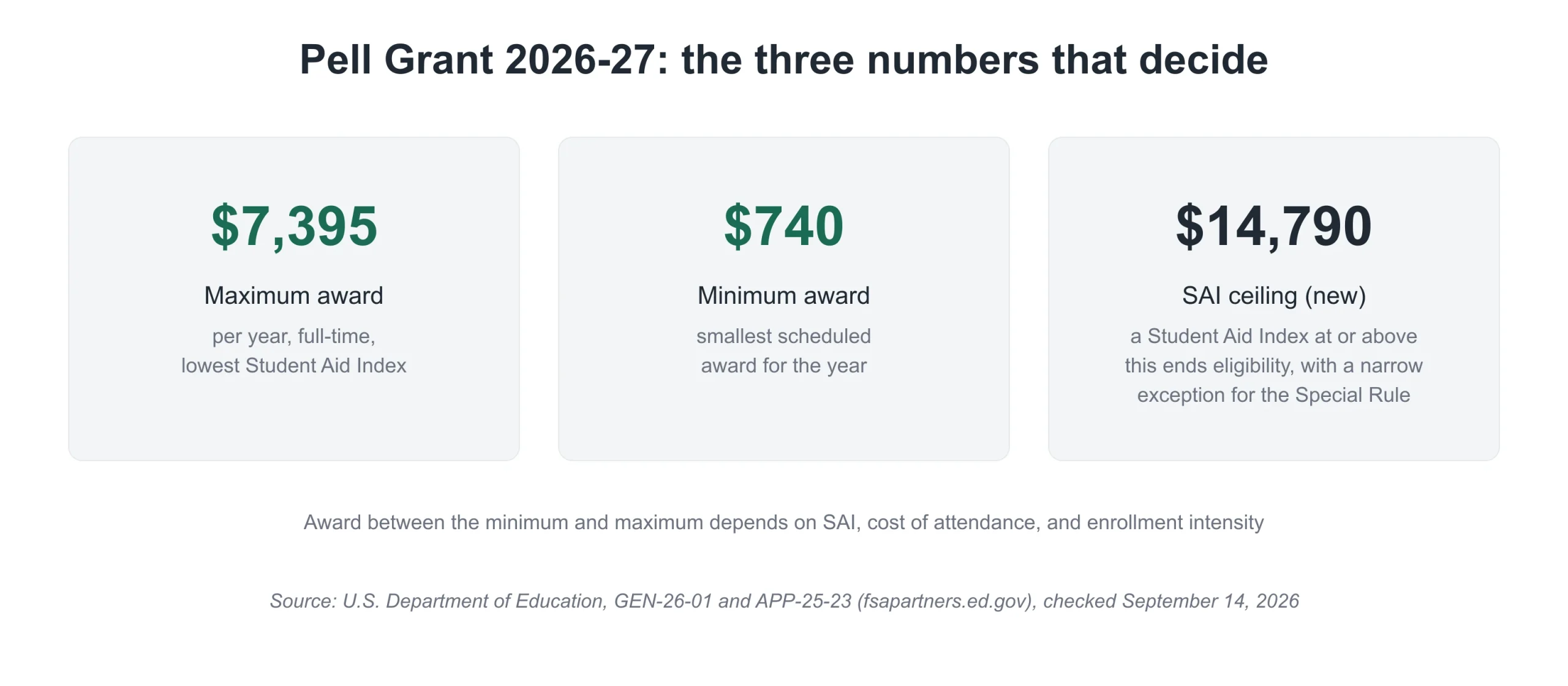
For 2026-27, awards run from $740 to $7,395 per year. Your exact amount depends on your Student Aid Index from the FAFSA, your school’s cost of attendance, and your enrollment intensity; part-time students receive a prorated share. Who qualifies, the income math, and this year’s new rules, including the $14,790 SAI ceiling, are covered in our guide to Pell Grant eligibility.
Two features stretch the program further. Year-round Pell can pay up to 150 percent of your scheduled award in one year if you add a term like summer. The lifetime limit is the equivalent of 12 full-time terms, roughly six years, tracked as Lifetime Eligibility Used on StudentAid.gov.
How does Pell fit with other aid?
Pell stacks with state grants, institutional grants, scholarships, work-study, and loans, and schools must determine Pell before packaging the rest. Total aid generally can’t exceed your school’s cost of attendance, so a large outside scholarship can shrink other parts of your package; schools often reduce their own institutional aid first. Read each award letter as a whole rather than one line.
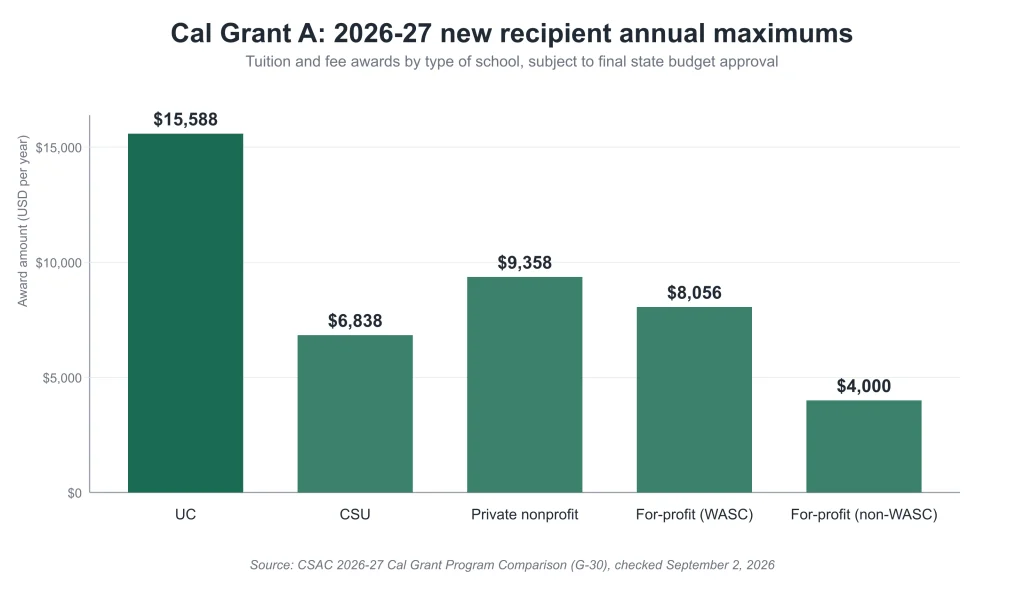
State programs layer on top. California students, for example, are considered for the Cal Grant from the same FAFSA, and the state picture is covered in our Cal Grant guide. The full federal-to-private sequence lives on our find college grants page.
How do you get a Pell Grant?
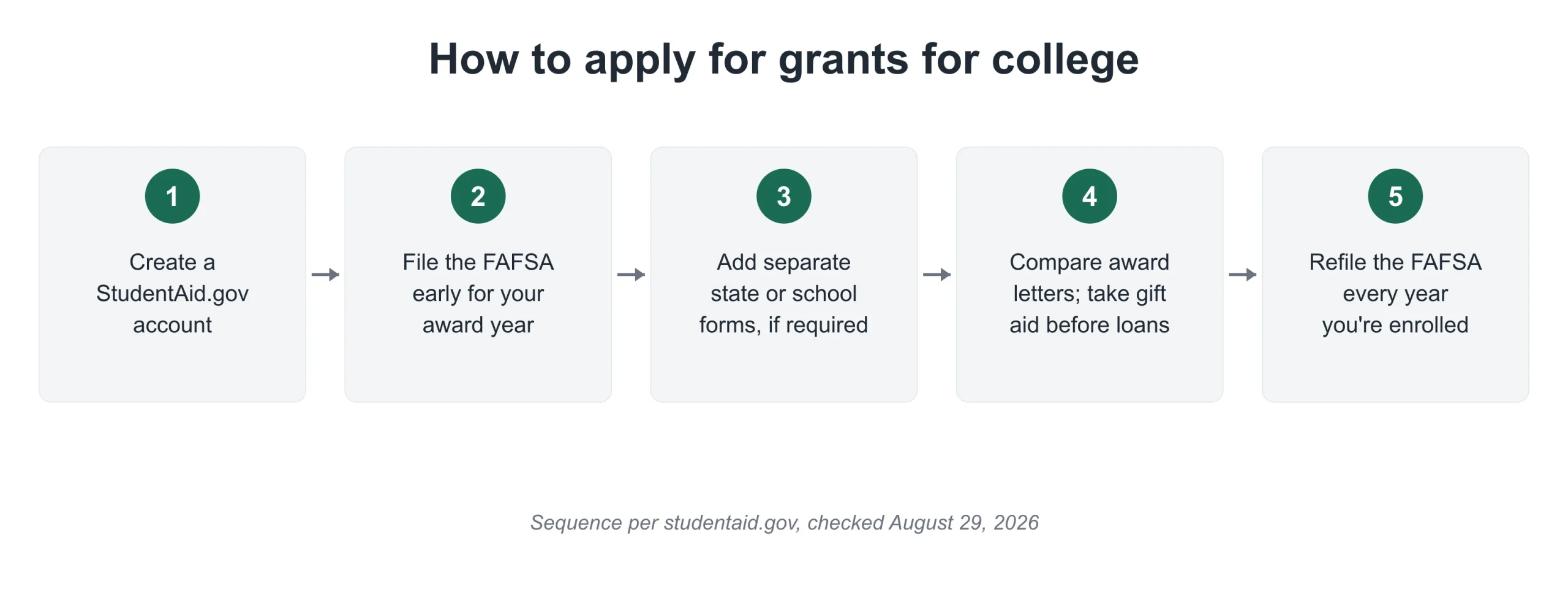
- Create a StudentAid.gov account.
- File the FAFSA form as early as you can. It’s free and it’s the entire application.
- Check your FAFSA Submission Summary for your estimated eligibility.
- Compare the award letters your schools send.
- Refile the FAFSA every year you’re enrolled.
That’s what a Pell Grant is: need-based federal gift aid, $740 to $7,395 for 2026-27, paid through your school with the remainder in your pocket for education costs, renewable every year you file and stay on track. Start with the FAFSA, and if what you actually need is business funding, the free Funding Eligibility Assessment points you at the right lane in minutes.
FAQ
What is a Pell Grant in simple terms?
It’s money from the federal government for college that you don’t repay in most cases. It goes to undergraduates with financial need, based on the FAFSA, and your school applies it to your bill before paying you any remainder.
How much is the Pell Grant for 2026-27?
Between $740 and $7,395 for the award year, per the Department of Education (checked September 14, 2026). The exact amount depends on your Student Aid Index, your school’s cost of attendance, and your enrollment intensity.
Do you ever have to pay back a Pell Grant?
Only in limited cases, such as withdrawing early in a term or an enrollment change that reduces what you qualified for after funds were paid. Your school notifies you if that happens.
What can Pell Grant money be used for?
Tuition, fees, and housing first, applied by your school. Any remainder is paid to you for education-related costs like books, supplies, transportation, and off-campus living expenses.
How many years can you get the Pell Grant?
The equivalent of 12 full-time terms, roughly six years. Each year’s full award uses 100 percent of that year’s share, and you can check your Lifetime Eligibility Used on StudentAid.gov.
Is a Pell Grant the same as financial aid?
It’s one piece of it. Financial aid is the whole package: grants, scholarships, work-study, and loans. Pell is the largest federal grant inside that package, and schools determine it first.