5 min read
 06.03.2026
What Is a Grant? Types, Funding Sources, and How to Find Grant Opportunities

What Is a Grant?
A grant is a non-repayable financial award designed to support projects and initiatives that offer public benefit or meet specific goals. Grants are typically given by government agencies, private foundations, corporations, and nonprofits to fund activities in education, scientific research, business development, the arts, and community programs. Unlike loans, grants do not have to be paid back, provided recipients use the grant money as intended and meet all required reporting obligations.
Grants play a vital role in fostering innovation, advancing research, and promoting social or economic development. The process to apply for a grant is usually competitive—applicants submit detailed proposals outlining how the funding will be used and the expected impact. To explore the difference between grants and other types of funding, check out our comprehensive guide on what is grant money and how to apply.
Types of Grants: Government, Private, Corporate, Foundation, and Individual
There are several main types of grants, each designed for different purposes and applicants.
Government Grants: Awarded by federal, state, or local government agencies to fund scientific research, social initiatives, small business development, infrastructure improvements, and education. Examples include grants from the NIH, NSF, and Department of Education. Discover more in our detailed article on government grants explained.
Private Foundation Grants: Provided by nonprofit foundations with a mission to support sectors such as health, education, the arts, and social justice.
Corporate Grants: Issued by companies as part of corporate social responsibility, community engagement, or innovation programs.
Individual Grants: Awarded directly to individuals in areas like the arts or education, supporting creative projects or academic pursuits.
Some grants are restricted to specific projects, while others allow funding for general operations. Aligning your project or organization with the right grant type boosts your funding success.
How Grants Differ from Loans and Scholarships
While grants, loans, and scholarships all provide financial aid, each operates differently and serves unique purposes.
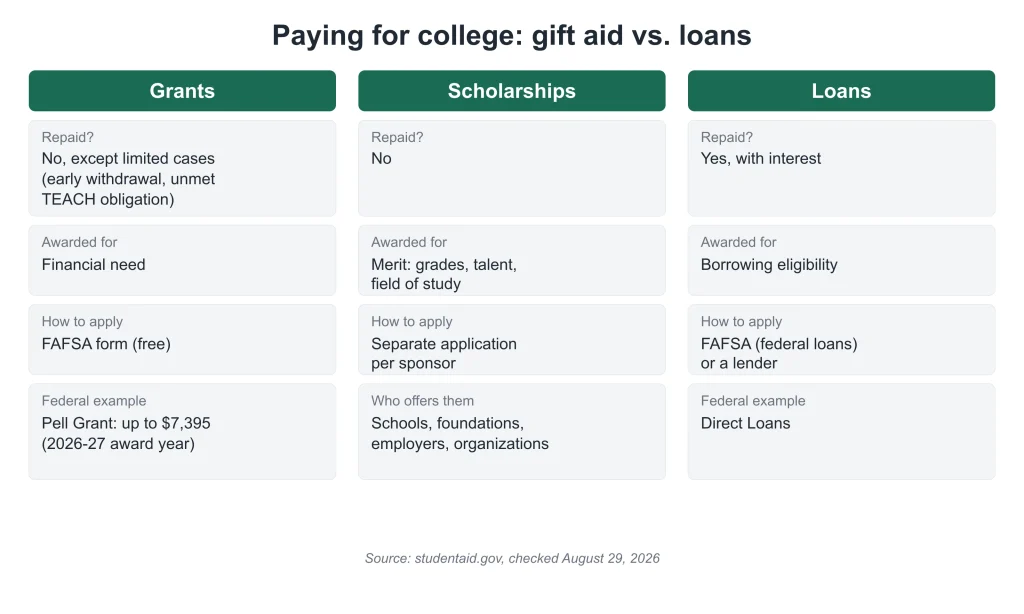
Grants: Grants are awarded based on merit, need, or alignment with the funder’s mission. Recipients are not required to repay grant funds but must follow strict usage and reporting requirements.
Loans: Loans require repayment with interest, typically based on the borrower’s creditworthiness and not tied to the scope or impact of a project.
Scholarships: Scholarships are mainly awarded for academic excellence, unique skills, or specific talents, and are generally designated for educational expenses.
What sets grants apart is their focus on supporting mission-driven work and requiring measurable outcomes. Learn more about the distinctions in our resource on government grants vs private foundation grants.
Common Funding Sources for Grants
Grants are funded by a range of organizations, each with different priorities and funding areas.
Federal, State, and Local Governments: Major funders of research, public health, education, infrastructure, and innovation programs. Stay updated with our federal grants calendar for new opportunities.
Private Foundations: Well-known organizations like the Gates Foundation or Ford Foundation support diverse projects worldwide.
Corporations: Many companies award grants to foster community development, economic growth, and technical advancements.
Nonprofit Organizations: Certain nonprofits offer grants to individuals and groups dedicated to specific missions.
Researching the focus and requirements of each grant provider is crucial to ensure your project is a strong match. Check out top grant opportunities for nonprofits for more inspiration.
Eligibility Criteria for Different Grants
Each grant opportunity comes with its own set of eligibility criteria. These may include:
Organization Type: Some grants are open only to nonprofit organizations, while others support universities, local governments, businesses, or individual applicants.
Project Focus: Many funders prioritize specific fields like STEM, healthcare, education, technology, or the arts.
Geographic Location: Some grants are restricted to projects located in specific regions, states, or countries.
Demographics: Certain grants are aimed at underrepresented groups, such as women, minorities, veterans, or youth.
Always review the guidelines thoroughly to ensure your application aligns with the funder’s mission and desired impacts. Read our guide on grant eligibility and disqualification for more insights.
How to Find Grant Opportunities
Finding suitable grant opportunities involves research, networking, and consistent effort. Try these proven strategies:
Online Grant Databases: Utilize platforms like Grants.gov for US federal funding, Foundation Directory Online, and Science.org’s funding tools to identify relevant grants in your field.
Networking: Attend industry conferences and local events, and join associations to connect with successful grant seekers and potential funders.
Industry Newsletters & Social Media: Subscribe to updates from grantmakers, agencies, and foundations, and follow trusted grant-writing blogs for the latest information.
Local Resources: Reach out to your local government offices, business associations, or community foundations to discover grants available in your area.
Stay organized by tracking deadlines and document requirements for each opportunity. For more detailed tactics, check our in-depth articles on how to find hidden small business grants, secrets for winning a grant, and finding underpublicized grants.
About Grants
Find grants with our guides.
Visit https://grants.com/wizard to start.