15 min read
 21.06.2026
Top Eligibility Criteria for Educational Grants in 2026: Your Complete Guide to Qualifying
Overview of Educational Grant Types in 2026
Educational grants continue to offer vital financial support for students throughout the United States in 2026. Whether you’re attending a traditional university, a community college, a trade school, or enrolling in a specialized program, recognizing the main categories of grants will help you identify which programs best match your educational path and background.
Most grants fall under two main categories: need-based and merit-based. Need-based grants, such as the Pell Grant, are distributed based on a student’s financial situation. Merit-based grants focus on achievements like academic performance or unique talents. Beyond these, there are field-specific opportunities (targeting students in priority disciplines), demographic-targeted grants (promoting diversity and inclusion), and state-funded programs that reflect local workforce and educational needs. According to recent data from the National Center for Education Statistics, over 70% of undergraduate students received some form of grant or scholarship in the 2025–2026 academic year, highlighting the widespread importance of these funding sources. For a broader look at the evolving funding landscape, visit Overview: The Grant Landscape in 2026.
Federal, State, and Private Grant Differences in 2026
Federal educational grants, such as the Pell Grant, typically offer the broadest reach and are backed by strict eligibility requirements, including U.S. citizenship or eligible non-citizen status, demonstrated financial need, and enrollment in approved postsecondary programs. State grants, like the 2026 Cal Grant, often introduce extra criteria such as state residency and minimum GPA thresholds. Private foundations and organizations customize their grants to further specific missions, such as supporting a distinct academic field, cultural background, or community group.
Knowing these differences allows students to tailor their application strategy. By targeting the right grants and preparing the required documents, you can improve your chances of approval and avoid wasted effort on inapplicable programs. For more details, see Federal vs State vs Private Grants: Key Differences, Eligibility, and How to Apply for Funding.
Federal vs State Grant Eligibility in 2026
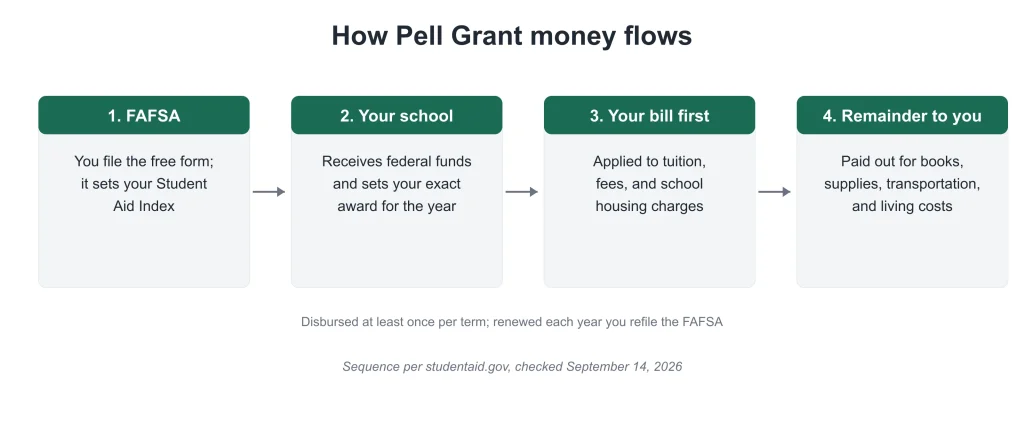
In 2026, eligibility for educational grants will often depend on whether the funding is federal or state-based. Both avenues require completion of the FAFSA (Free Application for Federal Student Aid) but may diverge when it comes to other requirements and deadlines.
Federal grants usually provide a standardized set of requirements, such as U.S. citizenship, evidence of financial need, and enrollment in accredited institutions. Meanwhile, state grants may add additional conditions—including requirements for in-state residency, minimum GPA standards, or attendance at specific education providers. For example, the 2026 Cal Grant mandates continuous California residency and proof of high school achievement, while New York’s TAP Grant targets residents who attend New York-based schools. For an overview of key national opportunities and advice, explore Top 26 Grants to Apply for in 2026.
How to Determine If You Qualify for Both Grant Types (2026)
To maximize your educational funding in 2026, submit your FAFSA early and research state-specific financial aid programs such as the Cal Grant (csac.ca.gov/cal-grant). Visit your school’s financial aid office to find resources and guidance tailored to your situation. Many students can receive both federal and state awards, but each will require different forms of documentation and eligibility verification. To ensure all paperwork is in order, consult Essential Grant Application Documents for Success in 2026.
Income and Financial Need Criteria for 2026 Educational Grants
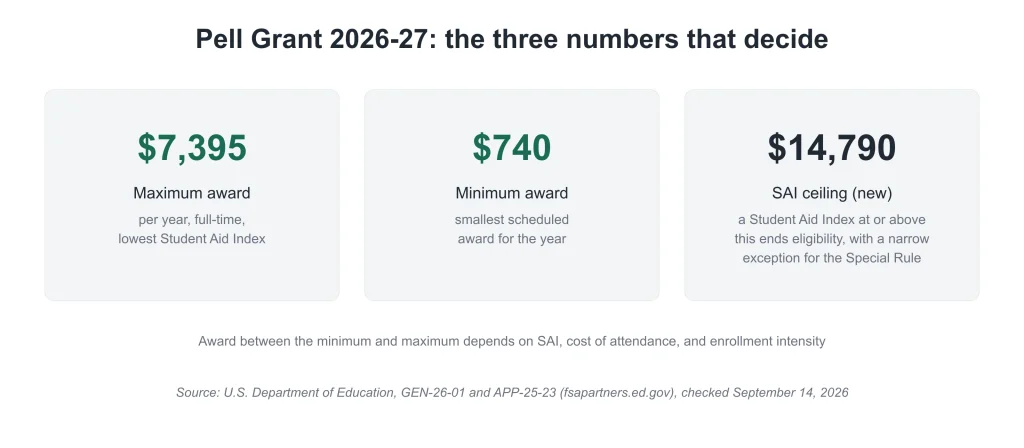
Demonstrating financial need is the foundation of eligibility for most educational grants in 2026. Federal programs—including the Pell Grant and state-funded assistance—use information from your FAFSA to evaluate factors such as your household income, assets, and the expected family contribution (EFC) or student aid index (SAI). These factors help determine your eligibility and potential award amount.
The FAFSA will consider your prior-prior year tax data, untaxed income, and the total number of household members attending college. Applicants with lower household income and fewer assets are typically prioritized for larger grant awards. Statistically, students from families with an income below the national median are over 50% more likely to receive need-based grants. Accurate documentation and prompt submission remain vital for consideration. For a step-by-step approach, read Grant Approval Process in 2026: Avoid Documentation Errors & Win Funding.
How Need Is Calculated for 2026 Grants
For 2026, calculation of financial need involves reviewing your household’s tax returns from two years prior, evaluating untaxed income, the number of dependents, and the number of students in college within your family. Specific grant programs may further refine how they define and determine need—always double-check the exact requirements listed on the official U.S. Department of Education eligibility portal (ed.gov/grants-and-programs/grants-higher-education/eligibility-designations-higher-education-programs). Providing complete and accurate documentation is essential; errors or missing information can delay or even disqualify your application. For more insights on overlooked criteria, visit Top Overlooked Grant Eligibility Criteria that Disqualify Applicants in 2026.
Academic Performance Requirements for 2026 Grants
Academic achievement plays an important role in securing many grants in 2026, regardless of whether they are merit- or need-based. For example, state programs and competitive private grants frequently set minimum GPA requirements, require satisfactory academic progress, or look for students who graduate within a specific class rank. Even for federal need-based grants, students must make satisfactory academic progress annually to renew their funding.
For multi-year awards, ongoing academic performance is vital. Consistent grades, completion of required courses, and compliance with your school’s standards safeguard your eligibility. According to the National Scholarship Providers Association, over 80% of renewable grants include annual performance reviews—making it essential for students to remain diligent throughout their studies. If you’re new to grant applications, our Essential Grant Application Checklist for First-Time Applicants in 2026 can help you prepare.
2026 GPA Thresholds and Other Academic Metrics
In 2026, programs such as the Cal Grant require a minimum GPA, typically between 2.0 and 3.0, for consideration. Some highly competitive scholarships may set the bar as high as 3.5 or more. Federal grants require students to uphold their institution’s satisfactory academic progress (SAP) policies, encompassing GPA thresholds, course completion rates, and graduation timelines. Students should review their institution’s SAP guidelines early to ensure compliance and maintain eligibility. For a deeper dive into requirement variations, check out Overview of Grant Eligibility.
Demographic and Minority Considerations in 2026 Grant Eligibility
A growing number of grants in 2026 are dedicated to advancing diversity, equity, and inclusion. These grants are designed to support students from underrepresented groups, such as first-generation college attendees, women in STEM, veterans, students with disabilities, and those from historically marginalized backgrounds. Their aim is to remove barriers and create greater access to higher education.
Eligibility for these programs goes beyond academics and income. Documentation may include proof of heritage, military records, or certification of a disability. Notably, private foundations and in some cases, federal and state initiatives, have broadened their criteria to reduce opportunity gaps. According to industry reports, about 40% of all private scholarship dollars in 2026 are earmarked specifically for minority or special population groups. To see more about programs with targeted inclusion, visit Student Grants for 2026: Your Complete Guide to Deadlines & Aid.
2026 Grants for Specific Communities
Key grants in 2026 offer support to Black, Hispanic, Native American, and Pacific Islander students, as well as LGBTQ+ youth and adult learners returning to education. Leading organizations such as the United Negro College Fund and Hispanic Scholarship Fund maintain current listings of opportunities. Applicants can also access the latest federal updates through the U.S. Department of Education’s official grants page (ed.gov/grants-and-programs/apply-grant/available-grants). For more on how grant funding supports diverse communities, see How Do Grants Impact Community Development?.
Field of Study-Specific Grants in 2026
In 2026, many grant providers target students enrolled in high-demand or underserved academic fields. Commonly prioritized disciplines include STEM (science, technology, engineering, and mathematics), healthcare, teaching, agriculture, and advanced manufacturing. These grants are intended to encourage students to pursue careers that align with critical workforce needs.
To qualify for field-specific grants, you may be required to declare a relevant major, provide academic transcripts showing prerequisite coursework, or submit additional materials such as a letter of intent or portfolio. Some programs, particularly in areas like teaching or nursing, may include commitments to work in designated sectors or communities following graduation. For example, the Bureau of Labor Statistics predicts a 7% growth in STEM field employment between 2024 and 2028, prompting expanded funding in these areas. Discover the latest trends and targeted programs in 2026 Grant Funding Trends: Top Sectors & Opportunities.
Examples of Popular Field-Specific Grants in 2026
Prominent field-specific grant programs for 2026 include the TEACH Grant (for education majors committing to high-need schools), the SMART Grant (supporting students in advanced science and math majors), and various state-funded scholarships for nursing, social work, and agriculture. Many of these grants require recipients to work in designated shortage areas after graduation, making careful review of program requirements essential before accepting an award. Learn more about sector-specific funding opportunities at Which Sectors Get the Most Grants in 2026?.
Frequently Asked Questions (2026)
What are the most common eligibility criteria for educational grants in 2026?
In 2026, common eligibility criteria for educational grants include demonstrated financial need via the FAFSA or state applications, enrollment in accredited programs, U.S. citizenship or eligible non-citizen status, satisfactory academic progress, and, for many programs, state residency. Some grants also require minimum GPAs, specific fields of study, or evidence of belonging to designated demographic groups. Always refer to the official website of each grant for the most current requirements.
How does income affect eligibility for educational grants in 2026?
Income is central for most need-based educational grants in 2026. Granting programs assess household income, assets, family size, and number of dependents enrolled in college using the FAFSA. Lower-income applicants generally qualify for more assistance, though each program has unique formulas and thresholds.
Are there GPA requirements for most educational grants in 2026?
Many state and institutional grants in 2026 require a minimum GPA, typically between 2.0 and 3.0, while competitive private scholarships may demand higher. Maintaining satisfactory academic progress, as defined by your school, is necessary for federal grants and renewals—this includes meeting minimum GPA and completion rate standards.
Do all educational grants in 2026 require U.S. citizenship?
Most federal and state grants in 2026 are limited to U.S. citizens or eligible non-citizens, such as permanent residents. Some institutional and private scholarships may be open to DACA recipients or international students, but these are less common and each has specific requirements.
What documents are needed to prove grant eligibility in 2026?
To confirm eligibility for educational grants in 2026, students typically need a completed FAFSA, recent tax returns or income statements, academic transcripts, and proof of residency or citizenship. Demographic-targeted programs may require additional paperwork, such as military discharge forms, disability certifications, or documentation of heritage. Always review the grant provider’s checklist for exact instructions.
Conclusion (2026)
Understanding the most common eligibility criteria for educational grants in 2026 is essential for maximizing your aid package and reducing college debt. By familiarizing yourself with the requirements for federal, state, and private grants—including financial need, academic performance, demographic qualifications, and field of study—you increase your potential for receiving substantial funding.
Timely and accurate completion of the FAFSA is critical, as it provides entry into most primary grant programs. Staying informed and organized—with updated academic records and supporting documents—protects your eligibility for continued or multi-year awards. Funding landscapes and program criteria can shift annually, so review requirements regularly.
For non-traditional students, adult learners, or those from underrepresented backgrounds, dedicated grants exist and often require specific documentation. Field-specific grants, such as those in nursing or teaching, may offer extensive support but may require later service commitments. Always weigh the unique eligibility factors and obligations attached to each grant.
No matter your educational path, staying proactive in researching, applying for, and maintaining eligibility for educational grants in 2026 gives you the best chance at securing critical financial assistance. Consult your financial aid office and use official government resources to guide your process.
Ready to unlock more educational grant funding for 2026? Visit your school’s financial aid office and official government grant portals, and start your application early to maximize both your eligibility and the funds available to you.
About Grants (2026)
Find grants with our guides.
Visit https://grants.com/wizard to start.