4 min read
 07.03.2026
Federal vs. State vs. Private Grants: Key Differences, Eligibility, and How to Apply for Funding

Understanding Federal, State, and Private Grants
Grants serve as vital funding sources for nonprofits, businesses, researchers, and community organizations in the United States. There are three primary types of grants—federal, state, and private (also known as foundation or philanthropic grants)—each varying in origin, eligibility, and impact on grant-funded projects.
Federal grants are funded by U.S. government agencies like the Department of Health and Human Services and the National Science Foundation. State grants, distributed by state governments, support localized programs or enhance federal initiatives. Private grants are offered by foundations, corporations, and philanthropic trusts, operating independently from government funds. Understanding these grant types is key to identifying the best funding opportunities for your specific needs. For an in-depth look, explore our comprehensive breakdown of grant types and funding sources.
Eligibility Criteria for Different Grant Types
Federal grants impose strict eligibility requirements based on federal law and agency policy. Typical applicants include nonprofits, educational institutions, tribal organizations, government bodies, and sometimes individuals. Applicants must often prove tax-exempt status, comply with federal regulations, and have previous grant management experience. Further details are in our guide on federal grant types and eligibility.
State grants generally share similar criteria but tend to focus on in-state applicants or initiatives that serve state priorities—such as education, healthcare, infrastructure, or community development.
Private grants offer more flexibility in who can apply. Foundations and corporations may target broad audiences or set very specific requirements, often prioritizing innovation or support for underrepresented groups. Application guidelines vary widely, so careful review of each funder’s terms is essential. To learn more, read our analysis of government vs. private foundation grant differences.
Comparing Application Processes
Federal grant applications are comprehensive and highly standardized. Most applicants use the Grants.gov portal and submit detailed narratives, precise budgets, compliance forms, and agency-specific documents. Deadlines are usually strict, and approvals may take several months. For a step-by-step tutorial, see our Grants.gov guide.
State grant applications, while formal, are often less complex. States may use proprietary systems or portals, feature variable deadlines, and prioritize projects addressing local needs. These applications are generally processed faster than federal submissions.
Private grant applications are typically streamlined, requiring concise proposals, summaries of project impact, and basic budgets. Review timelines are shorter, and it’s usually possible to communicate directly with the funder for questions or feedback. Boost your application success with tips from our expert grant-winning secrets.
Funding Amounts and Restrictions
Federal grants often provide the largest funding amounts, sometimes reaching millions of dollars. These grants come with strict usage rules, extensive reporting, and regular audits to ensure compliance. Recipients must closely follow outlined goals and outcomes. Learn more about federal grant compliance in our compliance guide.
State grants have smaller budgets compared to federal grants but may better address regional or state-specific needs. They still carry reporting requirements and restrictions, though these are sometimes less stringent than federal guidelines.
Private grants range widely in amount—funding small local initiatives to major national projects. Restrictions and reporting depend on the specific funder, with many foundations and corporations offering flexibility and less burdensome compliance. For actionable insights, visit our top small business grant options.
Common Examples of Each Grant Type
Federal grant examples include NIH research funding, Department of Education programs like Title I, and SAMHSA grants for mental health services. Explore more with our guide to top 2026 federal grant opportunities.
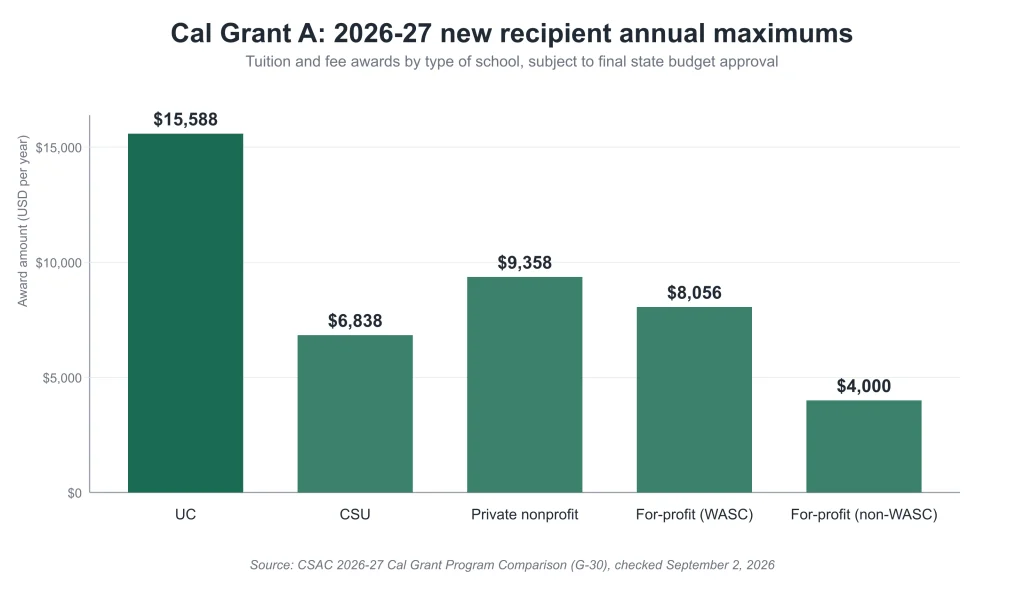
Popular state grants include California’s CalGrants for student aid, state arts council funds, and emergency recovery grants from local governments.
Private grant examples feature support from the Ford Foundation, the Bill & Melinda Gates Foundation, and initiatives such as Google.org’s Impact Challenge.
Pros and Cons of Federal, State, and Private Grants
Federal grants offer the largest funding pools but require significant administrative resources and strict compliance. State grants present less competition and align closely with local priorities but generally provide smaller awards and variable criteria. Private grants are the most flexible, often with less bureaucracy, but awards may be influenced by the funder’s specific focus or relationships.
When choosing grant funding, weigh your project’s size, your organization’s administrative capacity, reporting ability, and how well your mission matches the grant’s purpose. Discover how to identify the best grant with our step-by-step matching guide.
About Grants
Find grants with our guides.
Visit https://grants.com/wizard to start.