


 9 min read
 25.11.2026
How to Get an SBA Loan
To get an SBA loan, define your funding need, check program eligibility and repayment ability, choose a program, prepare your records, and apply through the appropriate lender. For lender-made 7(a) loans, the SBA provides a guarantee rather than lending directly to the business. Review the offer and closing documents before accepting debt.
Start with the SBA loan basics, then compare the program’s permitted uses with your plans.
Grants.com is not a government agency or a lender and does not guarantee eligibility, approval, or funding. See the full disclaimer at the end of this article.
Do you likely qualify?
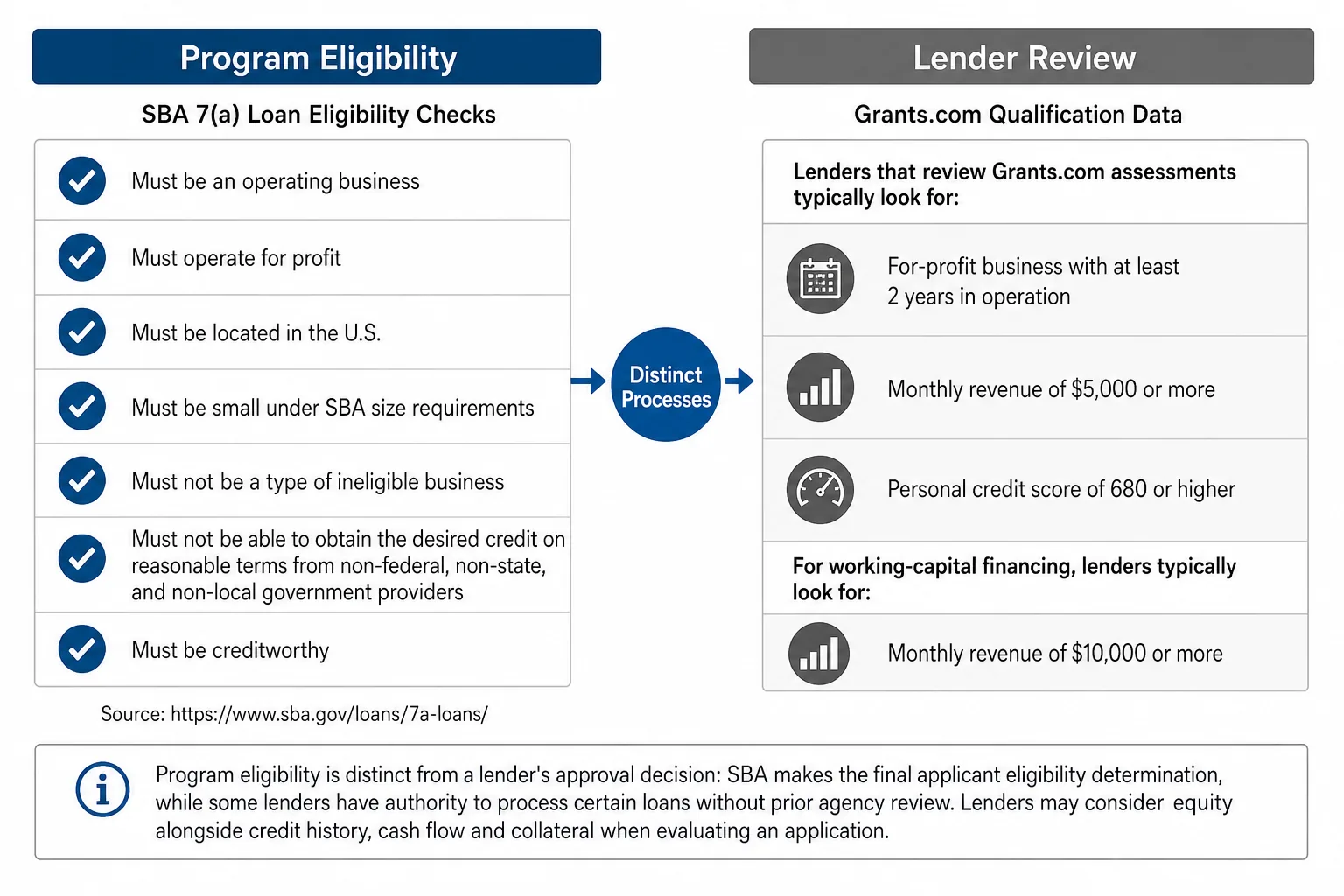
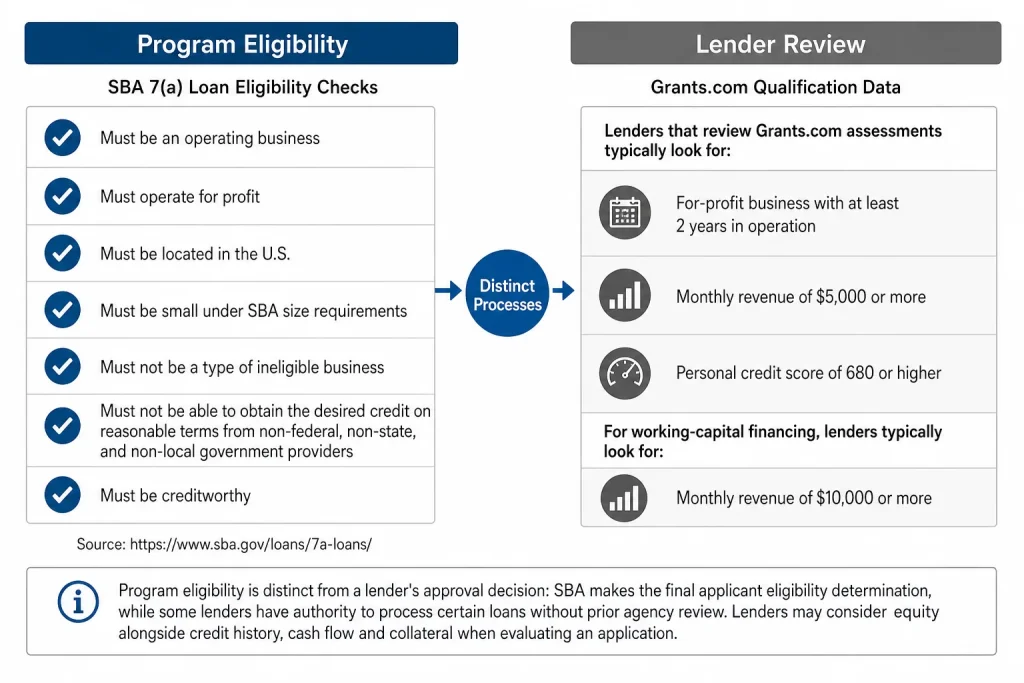
For SBA-backed loans, lenders that review Grants.com assessments typically look for a for-profit business with at least 2 years in operation, monthly revenue of $5,000 or more and a personal credit score of 680 or higher. These are typical lender criteria, not a determination that an applicant will be approved.
For working-capital financing, lenders that review Grants.com assessments typically look for monthly revenue of $10,000 or more. Use the free Funding Eligibility Assessment to check which funding options fit. If your business is pre-revenue or below the SBA-backed-loan revenue minimum stated in the preceding paragraph, start with the assessment rather than pursuing a loan through this article.
For 7(a) eligibility, the business must be an operating business, operate for profit, be located in the U.S., be small under SBA size requirements, not be a type of ineligible business, not be able to obtain the desired credit on reasonable terms from non-federal, non-state, and non-local government providers, and be creditworthy. Program eligibility is distinct from a lender’s approval decision: SBA makes the final applicant eligibility determination, while some lenders have authority to process certain loans without prior agency review.
Lenders may consider equity alongside credit history, cash flow and collateral when evaluating an application.
Can a startup get an SBA loan? Yes. SBA programs can fund new businesses. Microloans, for example, help small businesses start up and expand. In practice, lenders that review Grants.com assessments typically look for businesses with at least two years in operation. If your business is newer, start with the free Funding Eligibility Assessment to see which options fit your profile before you contact a lender.
How does an SBA loan guarantee work?
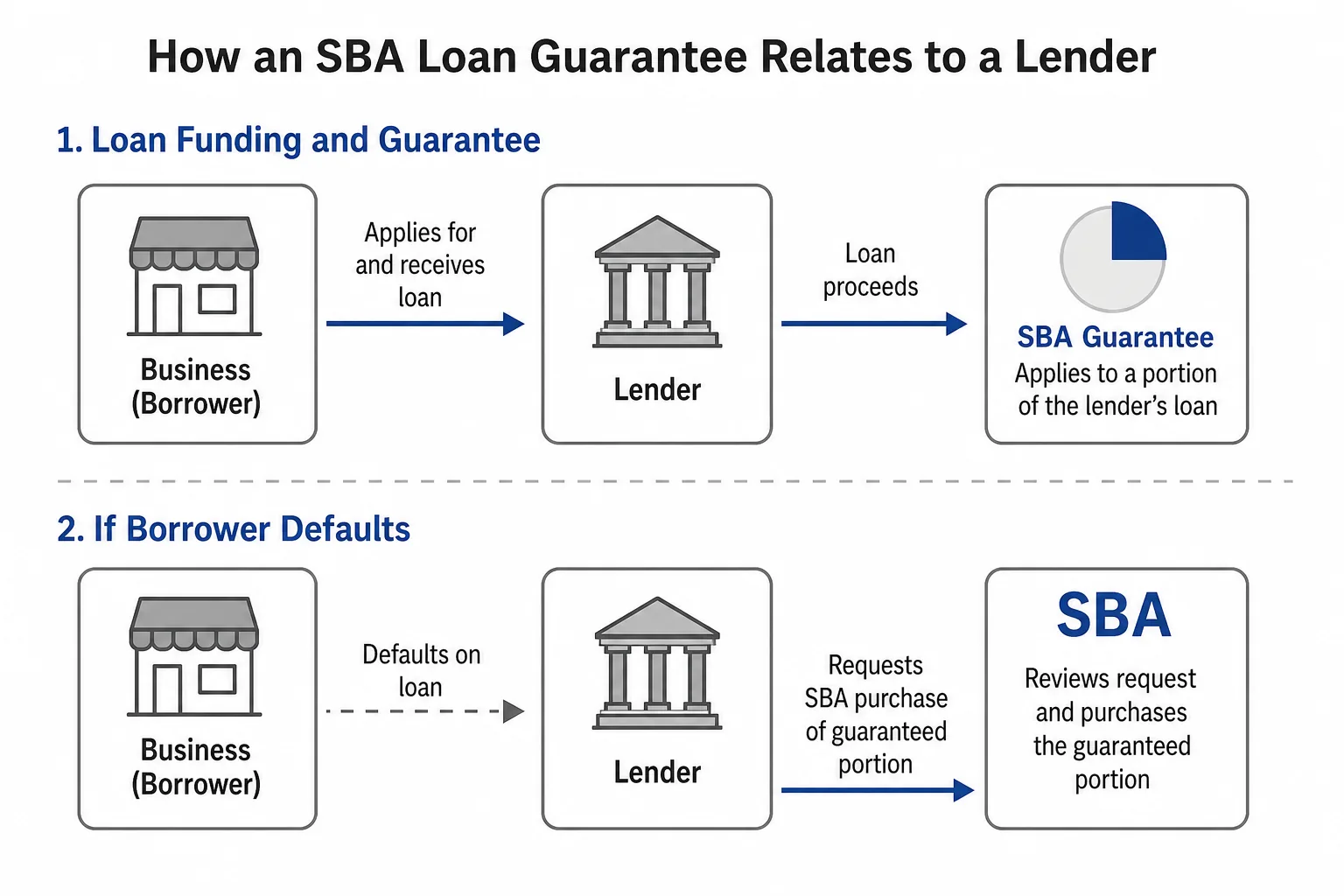
The SBA does not lend the money for a 7(a) loan. It guarantees part of a loan made by a participating lender, which lowers the lender’s risk. For a full explanation of the guarantee and of who actually lends the money, see how SBA loans work.
Which SBA loan program fits your purpose?
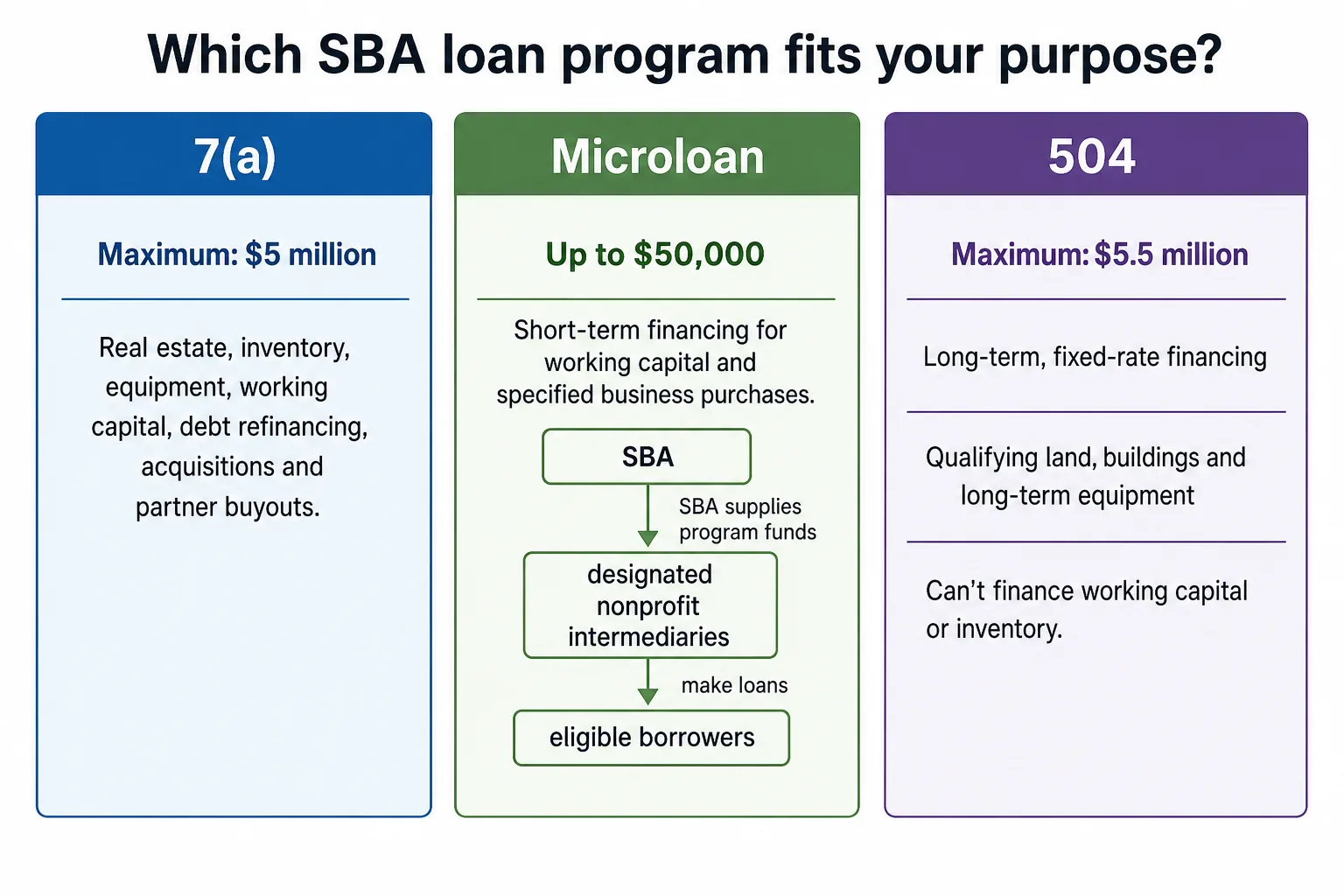
Choose the program based on what you need to finance, then compare the loan size and restrictions. The SBA describes 7(a) permitted uses that include real estate, inventory, equipment, working capital, debt refinancing, acquisitions and partner buyouts. The maximum 7(a) loan is $5 million.
A microloan of up to $50,000 can provide short-term financing for working capital and specified business purchases. SBA supplies program funds to designated nonprofit intermediaries, which make loans to eligible borrowers. Compare these details with the SBA microloan program before choosing where to apply.
For major fixed assets, 504 financing offers long-term, fixed-rate financing, with a maximum of $5.5 million stated in SBA’s detailed program description.
The 504 program can finance qualifying land, buildings and long-term equipment, but it can’t finance working capital or inventory.
What is the SBA loan process?
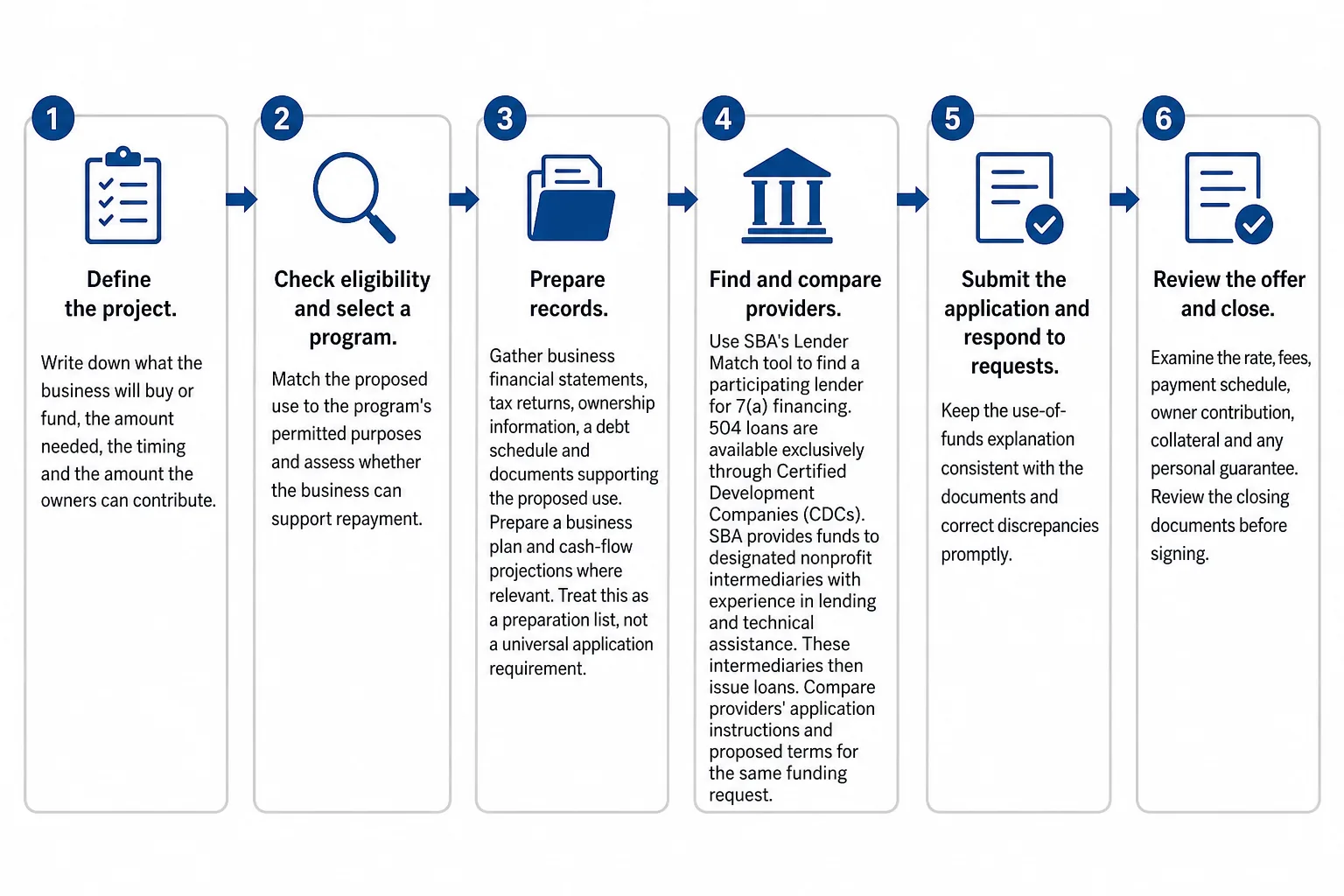
The process begins with a specific use for the funds and ends with a review of the financing documents. Use this sequence to prepare an application.
- Define the project. Write down what the business will buy or fund, the amount needed, the timing and the amount the owners can contribute.
- Check eligibility and select a program. Match the proposed use to the program’s permitted purposes and assess whether the business can support repayment.
- Prepare records. Gather business financial statements, tax returns, ownership information, a debt schedule and documents supporting the proposed use. Prepare a business plan and cash-flow projections where relevant. Treat this as a preparation list, not a universal application requirement.
- Find and compare providers. Use SBA’s Lender Match tool to find a participating lender for 7(a) financing. 504 loans are available exclusively through Certified Development Companies (CDCs). SBA provides funds to designated nonprofit intermediaries with experience in lending and technical assistance. These intermediaries then issue loans. Compare providers’ application instructions and proposed terms for the same funding request.
- Submit the application and respond to requests. Keep the use-of-funds explanation consistent with the documents and correct discrepancies promptly.
- Review the offer and close. Examine the rate, fees, payment schedule, owner contribution, collateral and any personal guarantee. Review the closing documents before signing.
How do you find and compare lenders?
SBA Lender Match prepares a summary of interested lenders two business days after submission. Lender Match is not a loan application and does not guarantee a lender match or loan offer.
After receiving the summary, you can talk with interested lenders or complete an application they provide. Use those conversations to explain your funding request and obtain each lender’s document list.
Banks, credit unions and other participating lenders provide 7(a) loans.
What will an SBA loan cost?
For 7(a) loans, repayment terms depend on purpose and generally extend up to 25 years for real estate or 10 years for other fixed assets and working capital. For variable-rate 7(a) loans over $350,000, the interest rate cannot exceed the base rate (usually the prime rate) plus 3 percentage points. Fixed-rate loans have a separate maximum that SBA publishes periodically. Compare your written offer’s rate, fees and full payment schedule to assess total borrowing cost.
Include the owner contribution and any costs due at closing in your own cash planning.
How can you avoid application setbacks?
Keep copies of the application and supporting records so you can refer to the same documents when responding to follow-up requests.
Don’t treat a response from a lender-finding tool or an agency response as a funding date. Build your business plans around the closing date in the offer, and leave room to respond to requests.
If an application is declined, request the reasons and address any gaps before deciding whether to apply again. When comparing alternatives, note that many Lender Match participants also offer conventional loans.
Ready to check which funding options fit your business? Complete the free Funding Eligibility Assessment before preparing your next application.
Check your real funding options
Answer a few questions about your business and see which funding option actually fits: SBA loans, working capital, the few grants that are real, or federal grant research. It is free and takes a few minutes.
Start the free Funding Eligibility Assessment →
FAQ
Can a startup get an SBA loan?
Yes. SBA programs can fund new businesses, and microloans are partly meant for that purpose (SBA microloans). Many lenders still prefer at least two years of operating history, so newer businesses should check their options with the Funding Eligibility Assessment first.
What credit score do you need for an SBA loan?
The SBA requires the business to be creditworthy and able to repay, and each lender sets its own credit criteria. Lenders that review Grants.com assessments typically look for a personal credit score of 680 or higher.
How much can you get with an SBA loan?
It depends on the program: up to $5 million for a 7(a) loan, up to $50,000 for a microloan, and up to $5.5 million for a 504 loan.
How do you find an SBA lender?
SBA’s Lender Match tool sends a list of interested lenders within two business days of your request. It is not a loan application and does not guarantee a match.
Does an SBA loan have to be repaid?
Yes. An SBA loan is a loan, not a grant. The SBA guarantees part of the loan to the lender, but the business repays it in full under the loan terms.
Does the Funding Eligibility Assessment approve a loan?
No. It shows which funding options fit your business. Approval decisions are made by the lender (and, for some loans, by the SBA).
Grants.com is a private funding-discovery and assistance platform. It is not a government agency and does not issue or approve grants unless explicitly stated for a specific program. Grants.com does not guarantee eligibility, approval, funding, award amounts, application outcomes, loan approval, or tax-credit acceptance. Final decisions are made by independent funders, agencies, lenders, or tax authorities. Information provided through Grants.com is for general informational and educational purposes and may not reflect the most recent program rules. Users should verify eligibility, deadlines, requirements, and application procedures with the official funding organization.
Recent Posts





Share This Post


