

Pell Grant: Amounts, Eligibility, and How to Apply
Pell Grant: Amounts, Eligibility, and How to Apply
Student funding
Federal gift aid you don’t pay back in most cases, worth $740 to $7,395 for 2026-27, applied for with one free form.
A Pell Grant is federal money for college that you don’t pay back in most cases. For the 2026-27 award year it pays between $740 and $7,395, and the entire application is one free form: the FAFSA. Figures are from the Department of Education’s 2026-27 award amounts letter (checked September 24, 2026).
Before anything else, the protection rule. The FAFSA is free, the grant isn’t competitive, and no legitimate service charges to get you a Pell Grant. Offers like that are the pattern our scam safety center exists for.
Here for business funding instead? The free Funding Eligibility Assessment shows which funding lane your numbers fit.
Grants.com is a private funding-discovery and assistance platform. It is not a government agency and does not issue or approve grants unless explicitly stated for a specific programme. Grants.com does not guarantee eligibility, approval, funding, award amounts, application outcomes, loan approval, or tax-credit acceptance. Final decisions are made by independent funders, agencies, lenders, or tax authorities. Information provided through Grants.com is for general informational and educational purposes and may not reflect the most recent programme rules. Users should verify eligibility, deadlines, requirements, and application procedures with the official funding organisation.
How much is the Pell Grant for 2026-27?
The maximum award is $7,395 and the minimum is $740. Where you land between them depends on three things: your Student Aid Index from the FAFSA, your school’s published cost of attendance, and your enrollment intensity. Part-time students receive a prorated share rather than being cut off.
Two rules stretch the program further than the headline number suggests. Year-round Pell can pay up to 150 percent of your scheduled award in a single year if you add a term such as summer. And the lifetime cap is the equivalent of 12 full-time terms, roughly six years, tracked as Lifetime Eligibility Used in your StudentAid.gov account.
Who qualifies for a Pell Grant?
In short: undergraduates who haven’t already earned a bachelor’s degree, who are U.S. citizens or eligible non-citizens, who are enrolled or accepted at a participating school, and who demonstrate financial need on the FAFSA. There is no GPA requirement and no essay.
The number that decides it for 2026-27 is the Student Aid Index. Applicants with an SAI of $14,790 or higher cannot receive a Pell Grant, apart from a narrow special rule for children of deceased servicemembers and public safety officers. The full income math, the new rules for this year, and the situations that trip people up are in our guide to Pell Grant eligibility.
How does the money actually reach you?
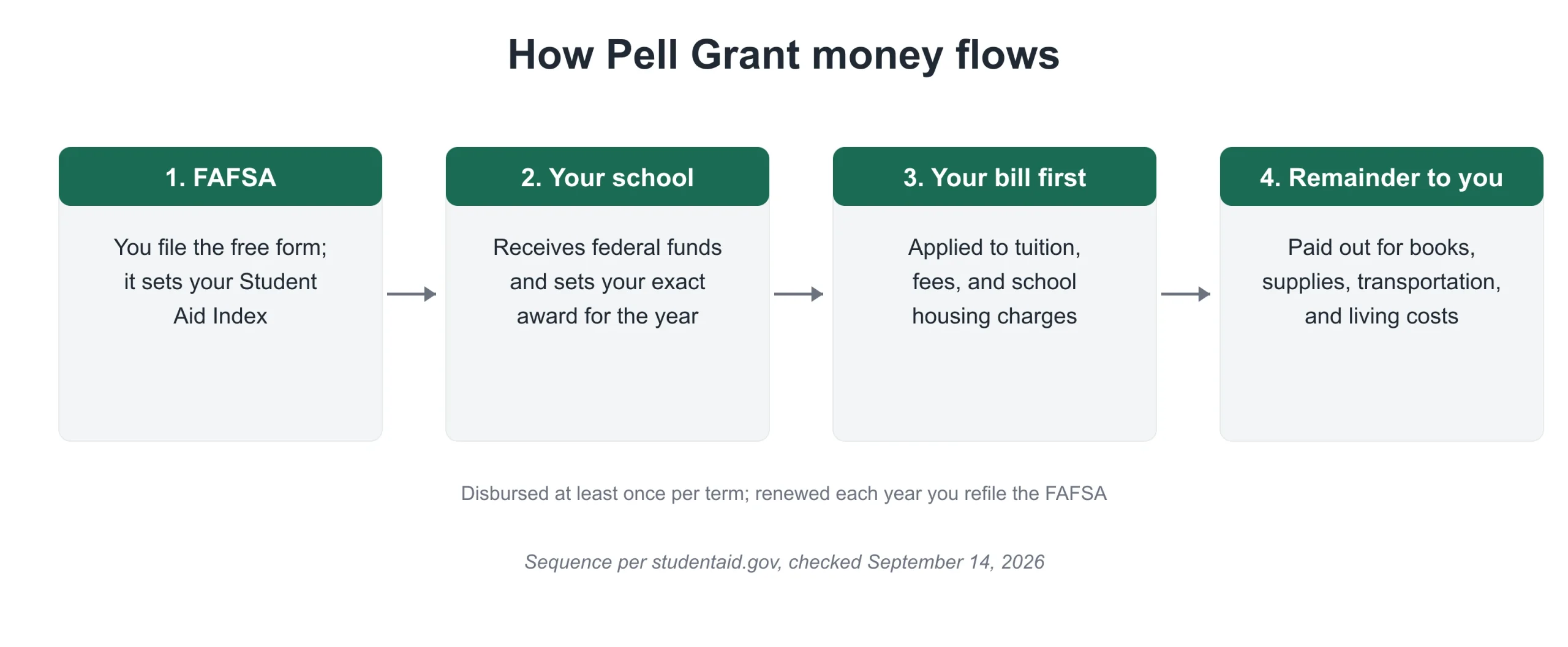
No check arrives from Washington. The Department of Education funds your school, and your school disburses the award at least once per term, applying it first to tuition, fees, and school-billed housing. Whatever is left after those charges is paid to you for books, supplies, transportation, and off-campus living costs.
If your aid still shows as pending when a tuition deadline is coming up, ask the financial aid office to hold your account so you aren’t dropped from classes while processing finishes. Our explainer on what a Pell Grant is and how it works walks through the disbursement timeline in more detail.
How do you apply?
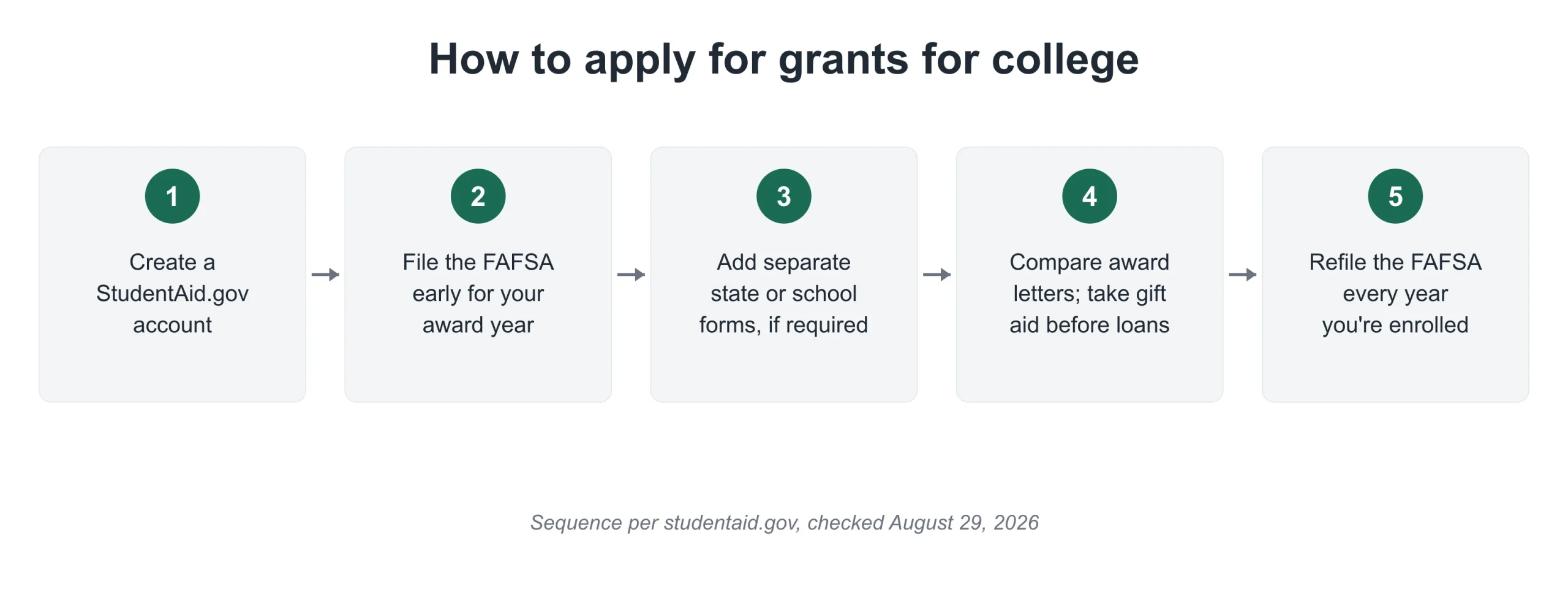
- Create a StudentAid.gov account.
- File the FAFSA form. It’s free, and it is the entire Pell application.
- Read your FAFSA Submission Summary for your estimated eligibility.
- Compare the award letters your schools send, as whole packages rather than line by line.
- Refile every year you’re enrolled.
File as early as you can. The federal deadline is the loosest one you face; state and institutional deadlines come much sooner, and some state aid is awarded until the money runs out.
How does Pell fit with other college aid?
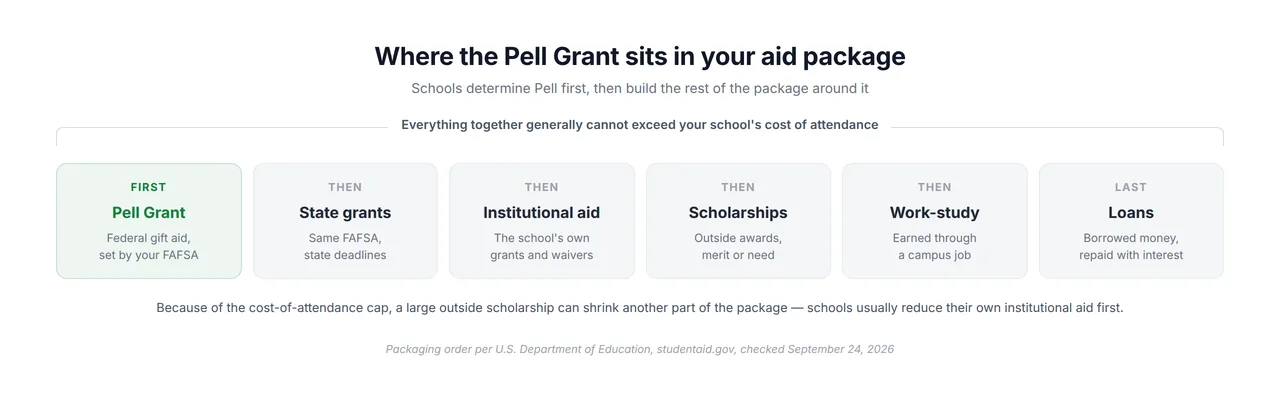
Pell is determined first, then everything else is packaged around it: state grants, institutional grants, scholarships, work-study, and loans. Your total aid generally can’t exceed your school’s cost of attendance, which is why a large outside scholarship sometimes shrinks another part of your package — schools usually reduce their own institutional aid first.
State programs layer on top of the same FAFSA. California students, for instance, are considered for the Cal Grant without a separate application. For the full federal-to-private sequence, start at find college grants.
Frequently asked questions
Does the Pell Grant cover the full cost of college?
Rarely on its own. At $7,395 maximum for 2026-27 it covers a meaningful share of tuition at many public institutions and less elsewhere. It is designed as the foundation of an aid package, not the whole of it.
Can I use a Pell Grant at any school?
Only at schools that participate in the Federal Pell Grant Program, which covers most accredited colleges, universities, and many career and technical schools. Confirm participation with the school’s financial aid office before you count on it.
What happens to my Pell Grant if I transfer schools?
Eligibility follows you, not the school. Add the new school to your FAFSA so your record is sent there, and expect the amount to change if the new school’s cost of attendance or your enrollment intensity differs. Your Lifetime Eligibility Used carries over.
Is Pell Grant money taxable?
Not when it pays qualified education expenses such as tuition, fees, and required books, supplies, and equipment. Amounts you use for room, board, travel, or optional expenses are generally taxable. IRS Publication 970 is the authority, and a tax professional is worth asking if a large remainder is paid to you.
Do I need a separate application for the Pell Grant?
No. The FAFSA is the only application. There is no Pell essay, no selection committee, and no fee. Every eligible student who files receives their calculated amount.