5 min read
 21.01.2026
Are Grants Taxable Income? IRS Rules, Tax Forms & Reporting Guide (2026)

What Is Taxable Income? Definition & IRS Rules
Taxable income refers to any money or value you receive that the IRS requires you to report and pay tax on. This includes wages, salaries, business profits, investment income, and certain grants. Understanding what counts as taxable income is crucial for accurate tax filing and avoiding IRS penalties.
Grants may or may not be taxable income, depending on their type and use. The IRS provides detailed rules to help individuals and organizations determine whether grant funds must be reported as income. For example, a grant used for personal living expenses is usually taxable, while one used for qualified education costs may not be. If you want to learn more about the basics of grants, including definitions and eligibility, see our comprehensive guide on what is a grant.
Types of Grants: Government, Educational, Business, Research & Personal
Grants come in many forms, each with unique tax implications. Common types include government grants, educational scholarships, business grants, research funding, and personal grants.
Educational grants and scholarships are often tax-free if used for qualified expenses such as tuition, fees, and required books. However, if you use these funds for other costs—like room, board, or travel—they become taxable income. Business and government grants are generally taxable unless a specific law excludes them. For instance, a small business grant to cover payroll is usually taxable, while a disaster relief grant for personal expenses may be tax-free under certain conditions. For a deeper dive into the different types of grants and how to apply, check out our step-by-step grant process guide.
IRS Guidelines: How Are Grants Taxed?
The IRS provides clear guidance on how grants are taxed. According to Topic No. 421, scholarships, fellowship grants, and other grants may be taxable depending on how you use the money and your specific situation (source: https://www.irs.gov/taxtopics/tc421).
If you use grant funds for qualified education expenses—such as tuition, fees, or required supplies—they are generally not taxable. However, using grant money for non-qualified expenses, like rent or meals, makes that portion taxable income. For business and research grants, the IRS expects you to report the full amount as income unless an exception applies. To learn more about allowable and non-allowable grant expenses, see our complete guide.
Taxable vs. Non-Taxable Grants: What You Need to Know
Not all grants are treated the same for tax purposes. Educational grants and scholarships used for tuition, fees, and required supplies are typically not taxable. However, amounts spent on non-qualified expenses—such as travel, housing, or optional equipment—must be reported as taxable income.
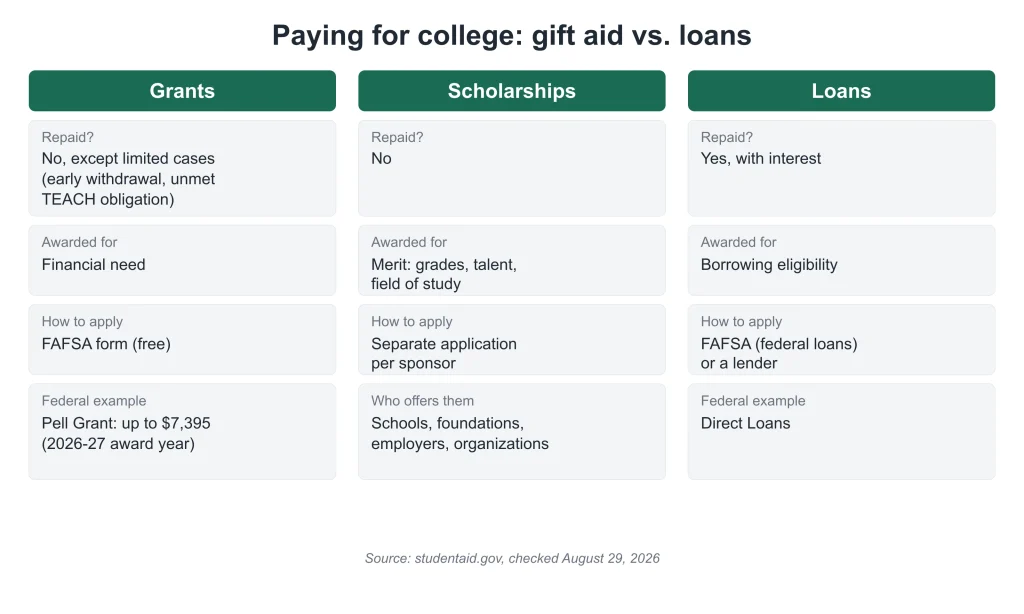
Business and research grants are usually taxable and should be included as income on your tax return. Always review your grant agreement and IRS guidelines to confirm your tax obligations. For example, a research grant that covers both lab supplies (non-taxable) and living expenses (taxable) must be split accordingly when reporting. If you want to understand the key differences between grants, loans, and scholarships, read our detailed comparison guide.
How to Report Grants on Your Tax Return
If you receive a taxable grant, you must report it as income on your federal tax return. The organization providing the grant may issue a Form 1099-MISC or another tax document showing the amount you received.
Accurate reporting of grant income helps you avoid IRS penalties and ensures compliance. If you are unsure how to report a grant, consult a tax professional or refer to IRS resources. For example, you might need to list the grant under ‘Other Income’ on your tax return and attach any relevant forms. For best practices on grant management and compliance, see our guide to grant management.
Tax Forms for Grants: Form 1099-MISC, 1098-T & More
Several tax forms may be involved when reporting grant income. Form 1099-MISC is commonly used for business, research, or personal grants. For educational grants, you may receive a Form 1098-T, which details scholarships and grants applied to tuition and related expenses.
Keep all documentation related to your grant, including award letters and tax forms. These records support your tax return and are essential if the IRS requests proof during an audit. For a checklist of essential documents for grant applications, visit our essential grant application documents guide.
Grant Taxation FAQ: Common Questions Answered
Are grants considered taxable income by the IRS? Yes, many grants are taxable unless specifically excluded by law or used for qualified expenses.
Do I have to pay taxes on a government grant? Most government grants are taxable unless the IRS states otherwise.
Are student grants and scholarships taxable? Only the portion used for non-qualified expenses, such as room and board, is taxable.
How do I report a grant on my tax return? Report taxable grants as ‘Other Income’ and include any relevant tax forms, such as Form 1099-MISC.
What types of grants are not taxable? Grants used for qualified educational expenses—like tuition and required supplies—are generally not taxable.
Are business grants taxable income? Yes, business grants are typically considered taxable income and must be reported. For more answers to common grant questions, see our FAQ on grant eligibility and application.
About Grants
Find grants with our guides.
Visit https://grant.com to start.