

How SBA Microloans Work and Who Qualifies
How SBA Microloans Work and Who Qualifies
SBA lending
Up to $50,000 through nonprofit intermediary lenders, and the published rules that decide who fits.

SBA microloans are small business loans of up to $50,000, made through nonprofit intermediary lenders rather than banks. According to sba.gov (checked August 17, 2026), the average microloan is about $13,000, the maximum repayment term is seven years, and the intermediaries, not the SBA, make all credit decisions and set all terms.
This is the SBA program built for the businesses the headline programs skip: very young, very small, often still pre-revenue.
An SBA microloan is a loan of up to $50,000 for starting or expanding a small business, delivered through SBA-funded nonprofit intermediary lenders, per sba.gov (checked August 17, 2026). The average microloan is about $13,000. It’s a loan, not a grant, and it repays over a term of up to seven years.
Is a microloan your lane? The free Funding Eligibility Assessment sorts that out before you contact a lender.
Grants.com is a private funding-discovery and assistance platform. It is not a government agency and does not issue or approve grants unless explicitly stated for a specific programme. Grants.com does not guarantee eligibility, approval, funding, award amounts, application outcomes, loan approval, or tax-credit acceptance. Final decisions are made by independent funders, agencies, lenders, or tax authorities. Information provided through Grants.com is for general informational and educational purposes and may not reflect the most recent programme rules. Users should verify eligibility, deadlines, requirements, and application procedures with the official funding organisation.
What is an SBA microloan?
A microloan is debt financing of up to $50,000 for small businesses and certain not-for-profit childcare centers, per the SBA’s program page. The SBA doesn’t lend the money itself. It funds designated intermediary lenders, which are nonprofit community-based organizations with experience in lending as well as management and technical assistance, and those organizations run the program for borrowers.
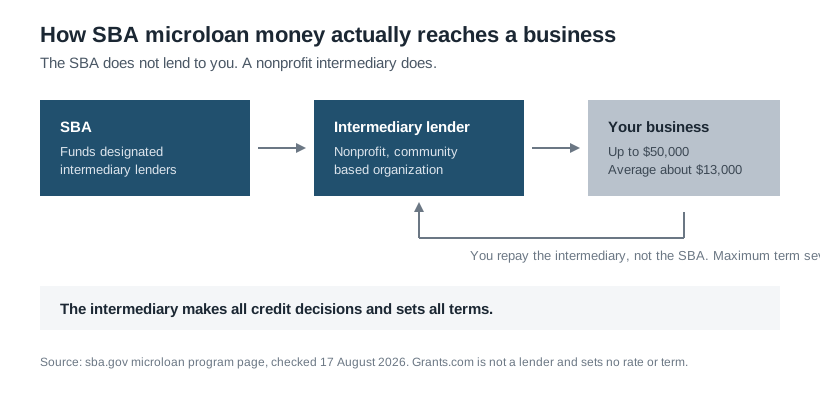
That structure changes who gets funded. A community lender that also offers business coaching reads a thin file differently than a bank does. It’s still a loan. It still repays. But the door is built for smaller businesses than the standard lending market serves.
Who is eligible for an SBA microloan?
The SBA’s published eligibility list is short (checked August 17, 2026): be an operating business, operate for profit, be located in the U.S., be small under SBA size requirements, and not be an ineligible business type under federal regulation. Certain not-for-profit childcare centers are the one exception to the for-profit rule.
Notice what’s missing. No minimum credit score, no revenue floor, no time-in-business requirement appears in the published rules. SBA-approved lenders make all credit decisions and set all terms, so each intermediary applies its own standards. You may be eligible; the intermediary decides.
What the money can and can’t buy
Allowed uses, per sba.gov: working capital, inventory, supplies, furniture, fixtures, machinery, and equipment.
Two uses are ruled out by the program itself. Proceeds from an SBA microloan cannot be used to pay existing debts, and they cannot be used to purchase real estate. If either of those is your actual need, this is the wrong program, and it’s better to know that before you apply. Buying property points toward other SBA lending; see the eligibility picture on our SBA loan requirements page.
Why microloans fit very young businesses
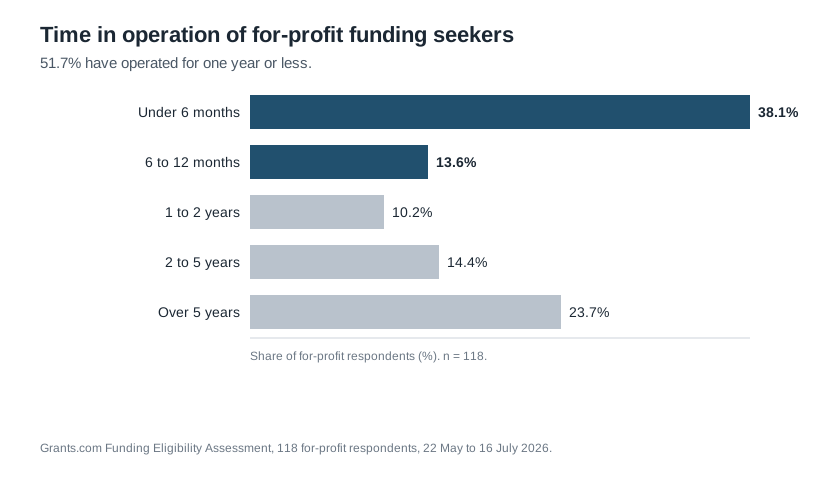
Among 118 for-profit respondents to the Grants.com Funding Eligibility Assessment between 22 May and 16 July 2026, 51.7% had operated for one year or less, and 38.1% for under six months. (Source: Grants.com Funding Eligibility Assessment, 118 for-profit respondents, 22 May – 16 July 2026.)
Demand is the same story on the dollar side. Across all 672 assessment submissions in the same period, 44.5% sought under $50,000, which is precisely the microloan range. (Source: Grants.com Funding Eligibility Assessment, 672 submissions, 22 May – 16 July 2026.)
Put the two together and the honest picture appears. The typical funding seeker is a business under a year old asking for less than $50,000. Grant programs rarely serve that profile, and $5 million loan programs aren’t shaped for it. The microloan program is. That’s not a promise of approval. It’s a statement about which door matches the request.
Repayment and rates, as the SBA publishes them
The maximum repayment term for an SBA microloan is seven years, per sba.gov (checked August 17, 2026). Interest rates vary depending on the intermediary lender and are generally between 8% and 13%, again per the SBA’s published program page. Those figures describe the program’s structure; they aren’t an offer, and Grants.com is not a lender. Your actual rate and term come from the intermediary, set case by case.
Repayment terms also depend on the loan amount, the planned use of funds, the lender’s requirements, and what the business owner needs, per the same page.
How to apply through an intermediary lender
You apply with an SBA-approved intermediary in your area, not with the SBA. The SBA maintains a directory of participating intermediaries by state on its microlender list. Since intermediaries make all credit decisions and set all terms, the same application can land differently at two different organizations.
Expect the conversation to cover your use of funds, basic financial documentation, and often some technical assistance or training, because the intermediaries are organizations that do both lending and coaching. Nobody legitimate charges you a fee just to be told whether you can apply.
Before you pick a lender, it’s worth knowing whether a microloan, a larger loan, or the non-repayable route fits your situation, and that’s what the free Funding Eligibility Assessment is for. If grants are what you’re really after, start with the honest answer on our SBA grants page first.
SBA microloans won’t fund everyone, and the intermediary’s decision is the one that counts. But for a young business that needs less than $50,000 for working capital, inventory, or equipment, this is the SBA program shaped like the actual request, and the published rules above are the whole public gate.
Frequently asked questions
How hard is it to get an SBA microloan?
There’s no published approval standard to measure against: SBA-approved intermediaries make all credit decisions and set all terms, per sba.gov. Community-based lenders often work with thinner files than banks, and many pair lending with training. Difficulty depends on the specific intermediary and your documentation.
What credit score do you need for an SBA microloan?
The SBA’s published microloan eligibility rules contain no minimum credit score (checked August 17, 2026). Each intermediary lender sets its own credit standards. A specific score requirement you read elsewhere is a lender’s standard or a guess, not SBA policy.
Can you use an SBA microloan to start a business?
Yes, within limits. The program exists to help small businesses start up and expand, per sba.gov, and eligibility requires an operating business. Funds can cover working capital, inventory, supplies, furniture, fixtures, machinery, and equipment, but not existing debts or real estate.
Do SBA microloans have to be paid back?
Yes. A microloan is a loan, repaid over a maximum term of seven years, at a rate set by the intermediary, generally between 8% and 13% per the SBA’s published page. Anyone describing a microloan as money you keep is describing a product that doesn’t exist.
What’s the difference between an SBA microloan and a 7(a) loan?
Size and channel. Microloans run up to $50,000 through nonprofit intermediary lenders, while 7(a) loans run up to $5 million through banks and other partner lenders, per sba.gov. The eligibility lists are similar, but the deciding lender and the paperwork differ.