5 min read
 02.03.2026
Federal Grants Explained: Types, Eligibility, and How to Apply for Funding Success

Understanding Federal Grants
Federal grants are financial awards provided by the United States government to support public projects and initiatives. These grants fund a diverse range of areas, including research, education, infrastructure, public health, and the arts. Unlike loans, grants do not require repayment, which makes them highly attractive but also highly competitive.
Government agencies distribute federal grants to eligible recipients, such as individuals, nonprofits, academic institutions, businesses, and governmental entities. Grants often act as catalysts for innovation, community growth, and economic development. However, each program comes with its own requirements and limitations. Understanding how the federal grant system works is crucial for preparing a competitive application. For a broader overview, see our guide on Understanding Grant Opportunities.
Types of Federal Grants
Federal grants fall into several main categories, each defined by its purpose and eligible recipients:
1. **Project Grants:** These are awarded for specific projects or initiatives, such as scientific research, public health campaigns, or arts programs.
2. **Formula Grants:** Provided according to formulas set by law, these grants usually go to states or localities to support ongoing programs like education funding or Medicaid.
3. **Block Grants:** These offer more flexibility, supporting broad-program areas such as community development or welfare. Recipients decide how to use the funds within federal guidelines.
4. **Earmark Grants:** Designated by Congress for particular purposes or organizations, earmark grants are less common and more narrowly focused.
Recognizing the differences between grant types helps applicants align their proposals and understand each program’s expectations for eligibility, oversight, and performance. If you’re seeking specific opportunities, check out the Top 26 Grants to Apply for in 2026.
Eligibility Criteria for Federal Grants
Eligibility varies widely across federal grant programs and depends on the goals set by the funding agency. Typical eligible applicants include state and local governments, nonprofit organizations, educational institutions, businesses, and occasionally individuals.
Each grant opportunity clearly outlines its eligibility requirements in the official Notice of Funding Opportunity (NOFO) or application guidelines. Common criteria include organizational status, project alignment with federal priorities, compliance with reporting standards, and sometimes location or target population.
It’s important to verify eligibility before preparing an application. This step minimizes wasted time and prevents unnecessary disqualifications. To dive deeper, review our article on 2026 Grant Eligibility: Key Criteria, Hidden Pitfalls and Compliance Tips.
The Federal Grant Application Process
Applying for a federal grant is a structured, multi-step process:
1. **Register online:** Start by creating accounts on Grants.gov and, if required, the System for Award Management (SAM.gov). Account verification can take several days, so start early.
2. **Identify relevant grants:** Search official databases like Grants.gov or USA.gov to find current opportunities that fit your objectives and eligibility.
3. **Prepare your application:** Most applications require a project narrative, detailed budget, work plan, and supporting documentation. Follow all guidelines carefully, and make sure your proposal aligns with the funding agency’s priorities.
4. **Submission and review:** Submit your application through the designated portal before the posted deadline. Applications undergo review for both compliance and competitiveness.
5. **Award notification and compliance:** If selected, recipients must follow strict program guidelines, submit reports, and ensure proper fund usage. Noncompliance can result in revoked funding.
Attention to detail at each stage significantly increases your chances of success. For a detailed walkthrough, see our Complete Guide to Finding and Applying for Federal Grants Online.
Federal Grants for Individuals
Although most federal grants support organizations, certain programs are available for individuals. These grants often benefit students, researchers, artists, or individuals affected by natural disasters.
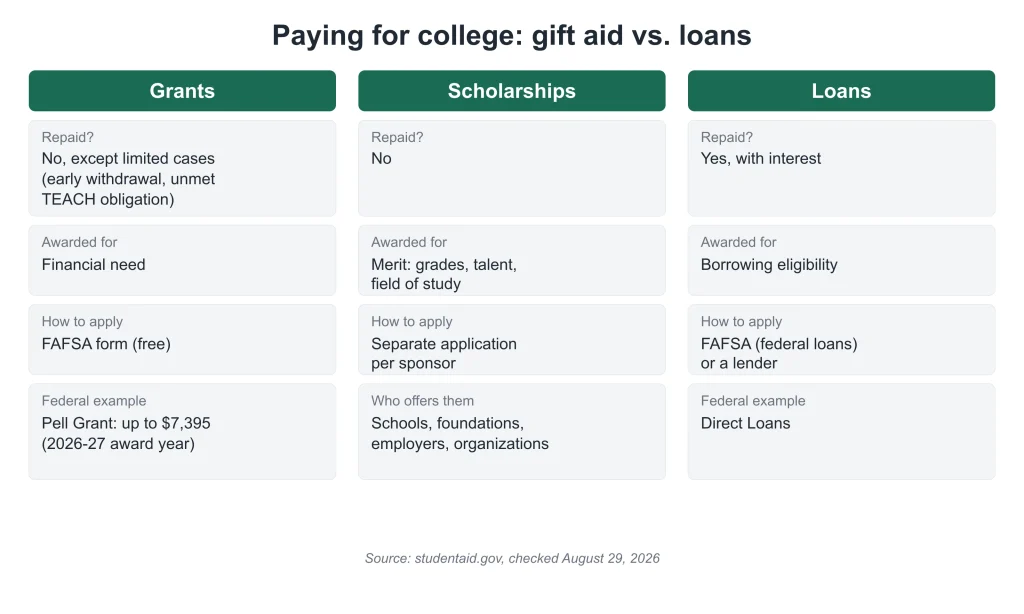
Examples include Pell Grants for college students and research fellowships awarded to scientists. When searching for individual grants, use only official government sources to avoid scams. Remember, there is never a fee required to apply for a federal grant.
For further details on securing student grants, review our Student Grants for 2026: Your Complete Guide.
Find verified opportunities at Grants.gov and USA.gov.
Federal Grants for Nonprofits
Nonprofit organizations are significant beneficiaries of federal grants, particularly in health, social services, education, housing, and cultural programs. To compete for these funds, nonprofits must prove both organizational capacity and clear alignment with federal objectives.
Maintaining up-to-date registrations, fulfilling annual reporting requirements, and establishing sound outcome measurements help nonprofits remain strong candidates for ongoing or repeat funding. Discover more Nonprofit Funding Opportunities in our latest guide.
Common Mistakes in Federal Grant Applications
Securing a federal grant is competitive, and many applications are rejected due to avoidable errors. Typical mistakes include:
• Missing application deadlines or submitting incomplete materials
• Overlooking eligibility requirements
• Not following specific formatting or submission instructions
• Providing weak or insufficient project justifications
• Making mistakes in the budget or failing to justify costs
Thorough preparation, internal reviews, and staying organized are essential to improve your success rate. For more insights on why applications fail and how to avoid mistakes, check out Why Grant Applications Fail: Top 6 Reasons for Denial & How to Avoid Them.
About Grants
Find grants with our guides.
Visit https://grants.com/wizard to start.